Shareable Image
How E20 petrol is made – understanding ethanol blended fuel production
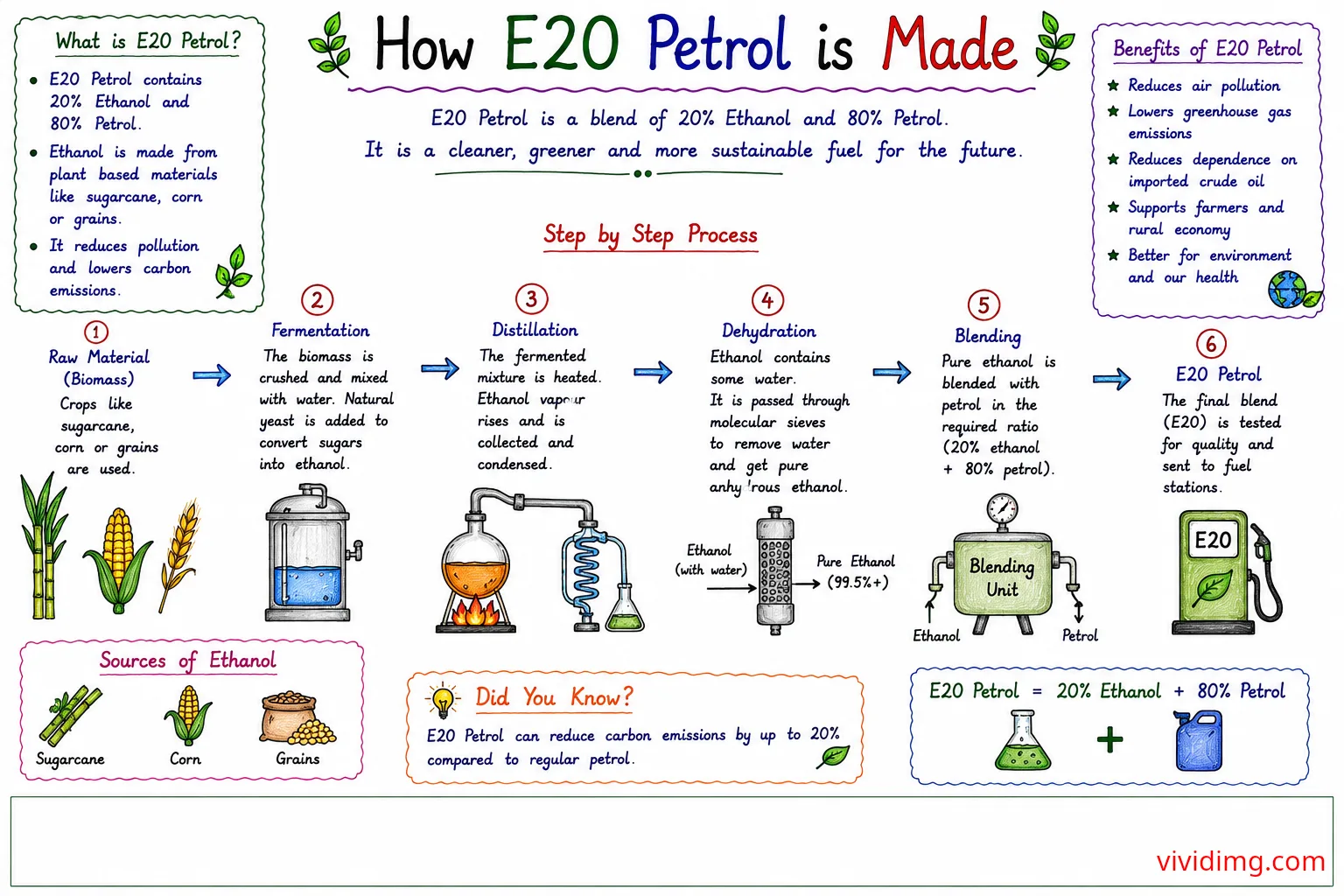
E20 petrol is an advanced blended fuel that combines 20% ethanol with 80% petrol to create a cleaner, more sustainable alternative to conventional gasoline. Introduced as part of India's green energy initiatives, E20 fuel helps reduce carbon emissions, decrease dependence on imported crude oil, and promote the use of renewable agricultural resources. This handwritten educational infographic clearly explains how E20 petrol is produced, making it an excellent learning resource for students, teachers, and anyone interested in renewable energy and sustainable transportation.
The production of E20 petrol begins with biomass such as sugarcane, corn, and grains. These agricultural crops contain natural sugars and starches that are converted into ethanol through fermentation using yeast. The fermented mixture is then heated during the distillation process, where ethanol is separated from the remaining liquid. Since distilled ethanol still contains water, it undergoes dehydration to produce nearly pure anhydrous ethanol suitable for fuel blending. Finally, the purified ethanol is carefully mixed with petrol in the correct ratio of 20% ethanol and 80% petrol. The finished E20 fuel is tested for quality before being supplied to fuel stations for public use.
E20 petrol offers several environmental and economic benefits. The use of ethanol helps reduce greenhouse gas emissions, lowers air pollution, supports cleaner combustion, and decreases reliance on fossil fuels. It also creates additional income opportunities for farmers by increasing the demand for crops used in ethanol production, such as sugarcane and maize. By encouraging domestic biofuel production, E20 contributes to India's energy security while supporting long-term sustainability goals.
This handwritten educational chart presents the complete manufacturing process using colorful illustrations, step-by-step flow diagrams, simple explanations, and informative fact boxes. It is suitable for science classrooms, chemistry lessons, environmental studies, engineering introductions, school assignments, classroom displays, and competitive exam preparation. The visual format makes the complex process of ethanol production and fuel blending easy to understand for learners of all ages.
As countries continue to adopt cleaner fuels and renewable energy technologies, understanding how E20 petrol is produced becomes increasingly important. This infographic helps learners explore the science behind biofuels while highlighting their role in reducing pollution, supporting sustainable agriculture, and building a greener future.