Shareable Image
Plant cell vs animal cell – understanding the key differences
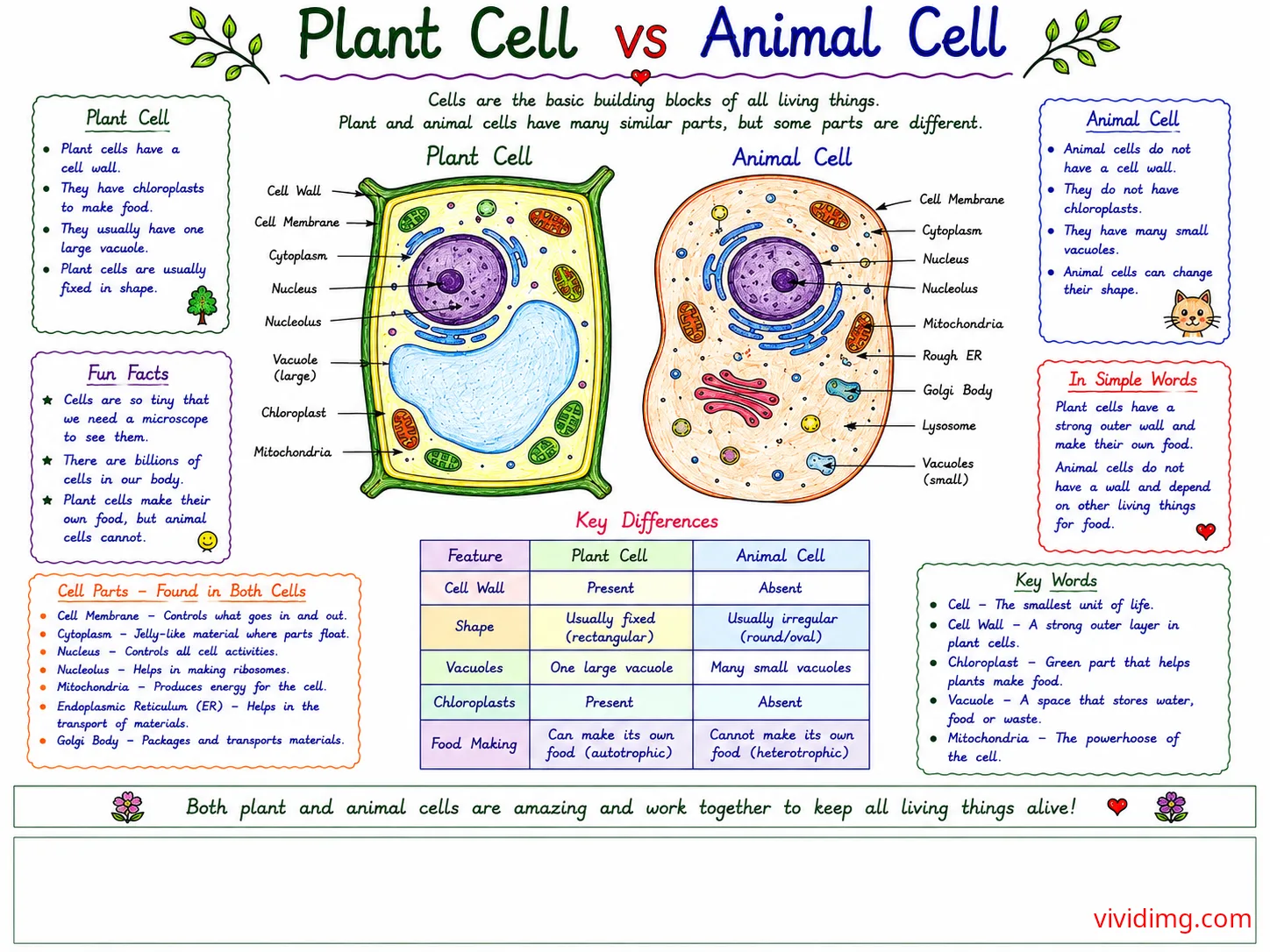
Plant cells and animal cells are the basic building blocks of living organisms. Although they share many common structures, each cell type has unique features that allow plants and animals to perform different functions. This handwritten educational comparison chart presents both cell types side by side, helping students easily identify their similarities and differences through colorful illustrations, clear labels, and a simple comparison table.
The plant cell is typically rectangular because of its rigid cell wall, which provides strength and support. It contains chloroplasts that enable the plant to produce food through photosynthesis, as well as a large central vacuole that stores water and helps maintain the cell's shape. Like all eukaryotic cells, it also contains a nucleus, cytoplasm, cell membrane, mitochondria, Golgi body, endoplasmic reticulum, and other essential organelles.
The animal cell , on the other hand, has a flexible cell membrane but no cell wall or chloroplasts. It is generally round or irregular in shape and contains several smaller vacuoles instead of one large central vacuole. Animal cells rely on obtaining nutrients from other organisms rather than producing their own food. Despite these differences, both plant and animal cells contain many common organelles that carry out vital functions such as energy production, protein synthesis, waste removal, and cell reproduction.
This handwritten comparison chart highlights the major structural differences, including the presence of a cell wall, chloroplasts, vacuole size, cell shape, and method of food production. It also includes labeled diagrams, key terms, interesting facts, and an easy-to-read comparison table, making complex biological concepts much easier for young learners to understand.
This educational resource is ideal for biology lessons, science classrooms, school assignments, homeschooling, classroom displays, competitive exam preparation, and science project work. The visual comparison encourages students to quickly recognize the characteristics of each cell type while building a strong foundation in cell biology and life sciences.
Understanding the differences between plant and animal cells is one of the first steps in learning about living organisms. This colorful handwritten illustration makes the topic engaging, memorable, and suitable for learners of all ages, helping students develop a deeper appreciation of how cells support every form of life on Earth.