Shareable Image
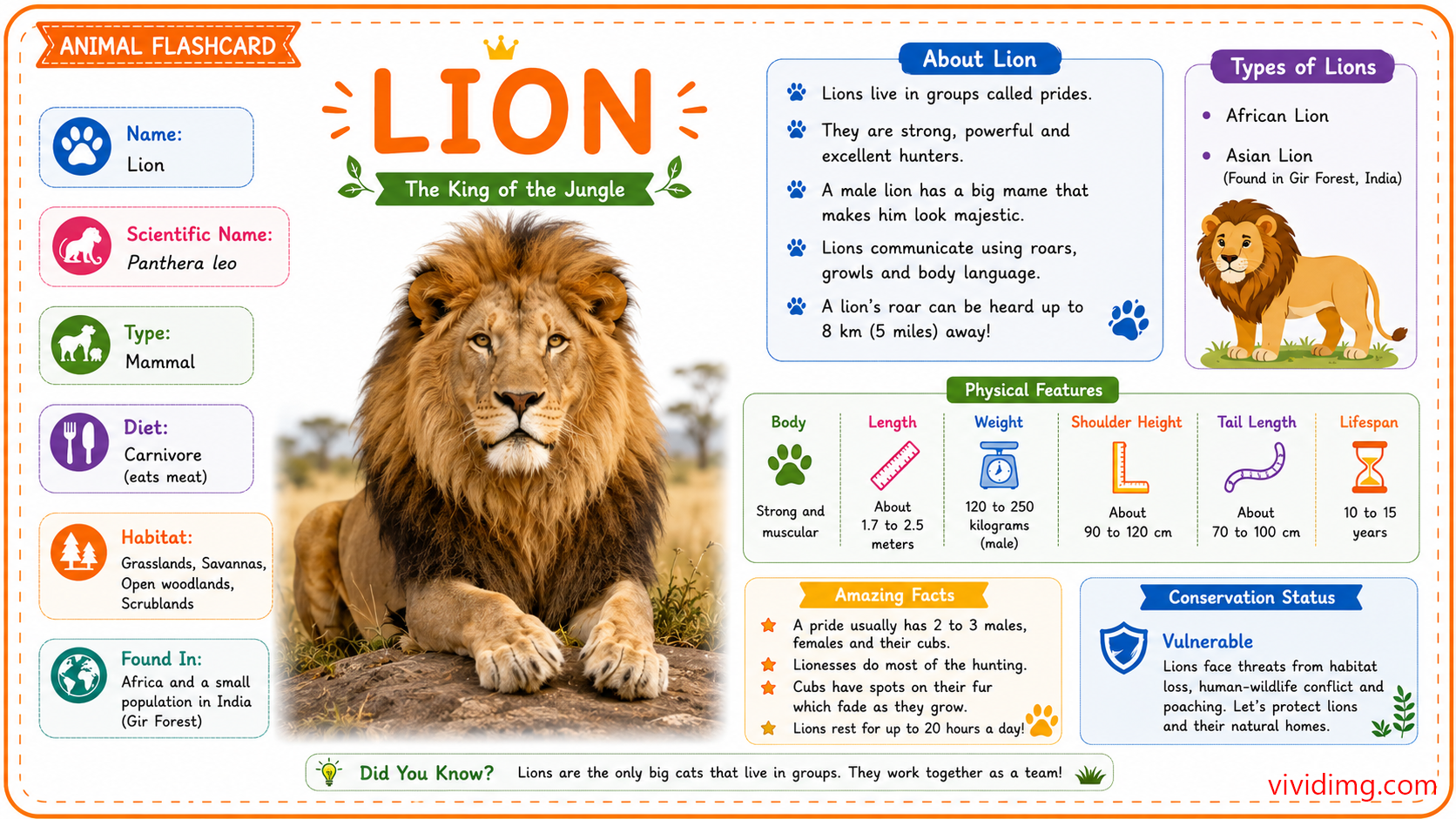
Lion facts for kids - Animal flashcard
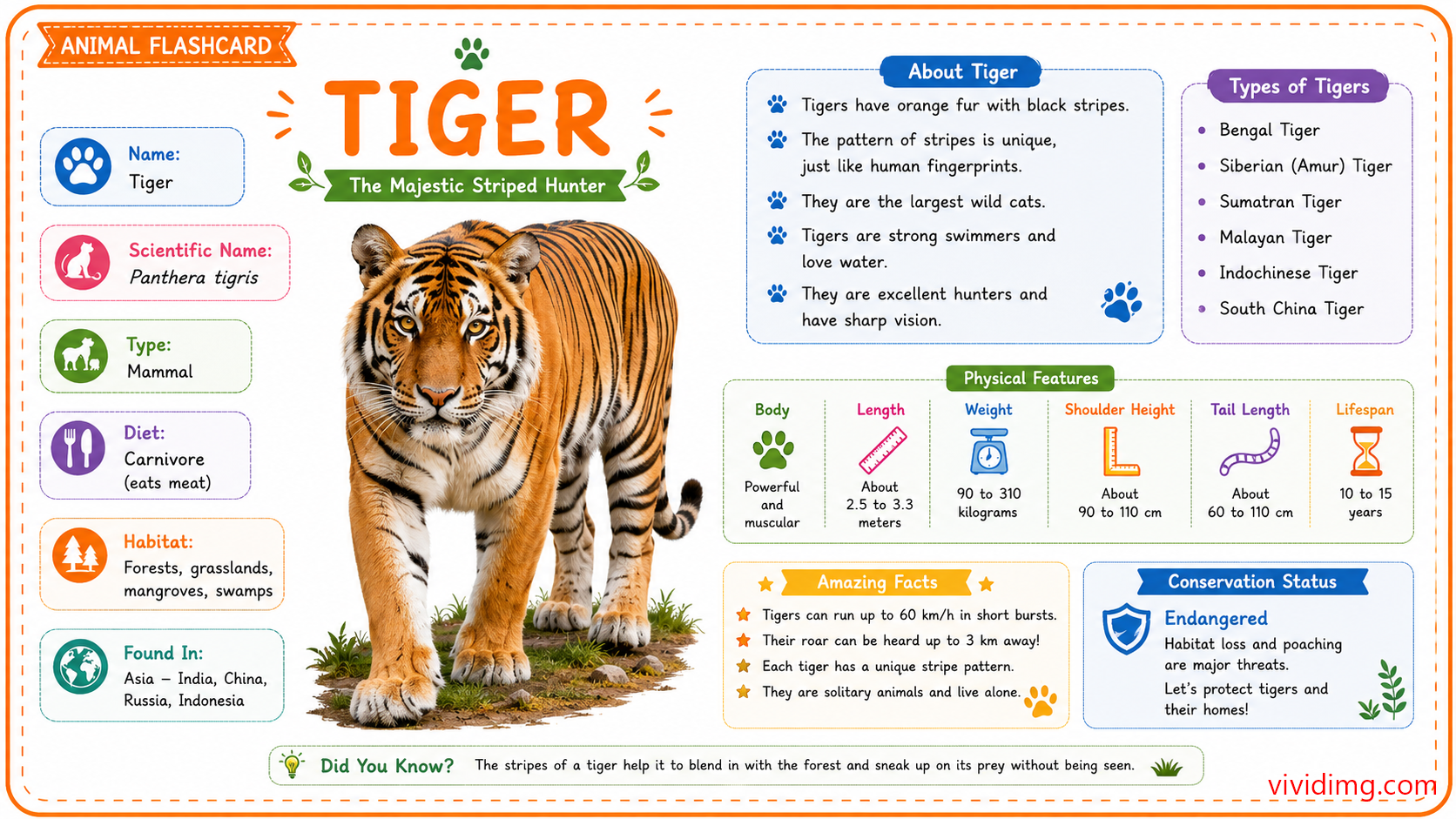
Discover the fascinating world of lions with this detailed educational animal flashcard designed to make wildlife learning enjoyable and easy for children. The lion, scientifically known as Panthera leo, is one of the most famous members of the cat family and is recognized by its strong body, powerful legs, sharp claws, and impressive appearance. Adult male lions are especially easy to recognize because of the mane surrounding their head and neck. Lions are mammals and carnivores, which means they eat meat and depend on hunting other animals for food. Their natural habitats include grasslands, savannas, open woodlands, and scrublands where they have enough space to hunt and live. Most wild lions are found in sub-Saharan Africa, while a small population of Asiatic lions survives in and around Gir Forest in Gujarat, India. This flashcard combines these essential facts with a realistic lion image so young learners can easily connect the animal's appearance with its classification, diet, habitat, and geographic distribution.
Lions have strong, muscular bodies specially adapted for hunting and survival. Adult lions vary considerably in size depending on their sex, age, and population, with males generally being larger and heavier than females. Their powerful jaws, large canine teeth, retractable claws, strong legs, and excellent senses make them effective predators. Unlike most other wild cats, lions are highly social animals. They usually live in groups called prides, which commonly include related females, their cubs, and one or more adult males. Members of a pride cooperate in several ways, including defending territory, protecting cubs, and sometimes hunting together. Lionesses perform much of the cooperative hunting within a pride, often using teamwork to approach and capture prey. Lions also communicate using scent marking, facial expressions, body movements, growls, grunts, and their famous roar. A lion's roar is extremely powerful and can travel several kilometres under suitable conditions, allowing lions to communicate with pride members and warn other lions about their territory.
There are two recognized living lion subspecies: Panthera leo leo, which includes lions from India and parts of western and central Africa, and Panthera leo melanochaita, which includes populations in eastern and southern Africa. Children may commonly hear the simpler terms African lion and Asiatic lion when learning about these animals. Lions also have many interesting behaviors that make them exciting subjects for wildlife education. They spend a large portion of the day resting and conserving energy, particularly during hot weather, and often become more active during cooler periods. Lion cubs are born with visible spots on their coats, and these markings usually become less noticeable as they grow older. Young cubs depend heavily on adult members of the pride for protection and food while learning the skills needed for survival. Despite the popular nickname 'King of the Jungle,' most lions do not actually live in dense jungles. Open savannas and grasslands are much more typical lion habitats. Learning facts like these helps children separate popular expressions from real scientific information about wildlife.
This lion flashcard also introduces an important lesson about wildlife conservation. Lions are currently classified as Vulnerable on the IUCN Red List, and many wild populations face serious challenges. Habitat loss, declining prey populations, human-wildlife conflict, and illegal killing are among the threats affecting lions in different regions. Protecting natural habitats and finding effective ways for people and wildlife to coexist are therefore important parts of lion conservation. This educational flashcard can be used for preschool and kindergarten learning, primary school science lessons, homeschooling, classroom discussions, animal identification activities, wildlife projects, general knowledge exercises, and printable educational collections. By combining realistic imagery with information about classification, diet, habitat, physical characteristics, social behavior, geographic distribution, interesting facts, and conservation, the flashcard gives young learners a broad introduction to one of the world's most remarkable big cats while encouraging curiosity and respect for animals and the natural environment.