Shareable Image
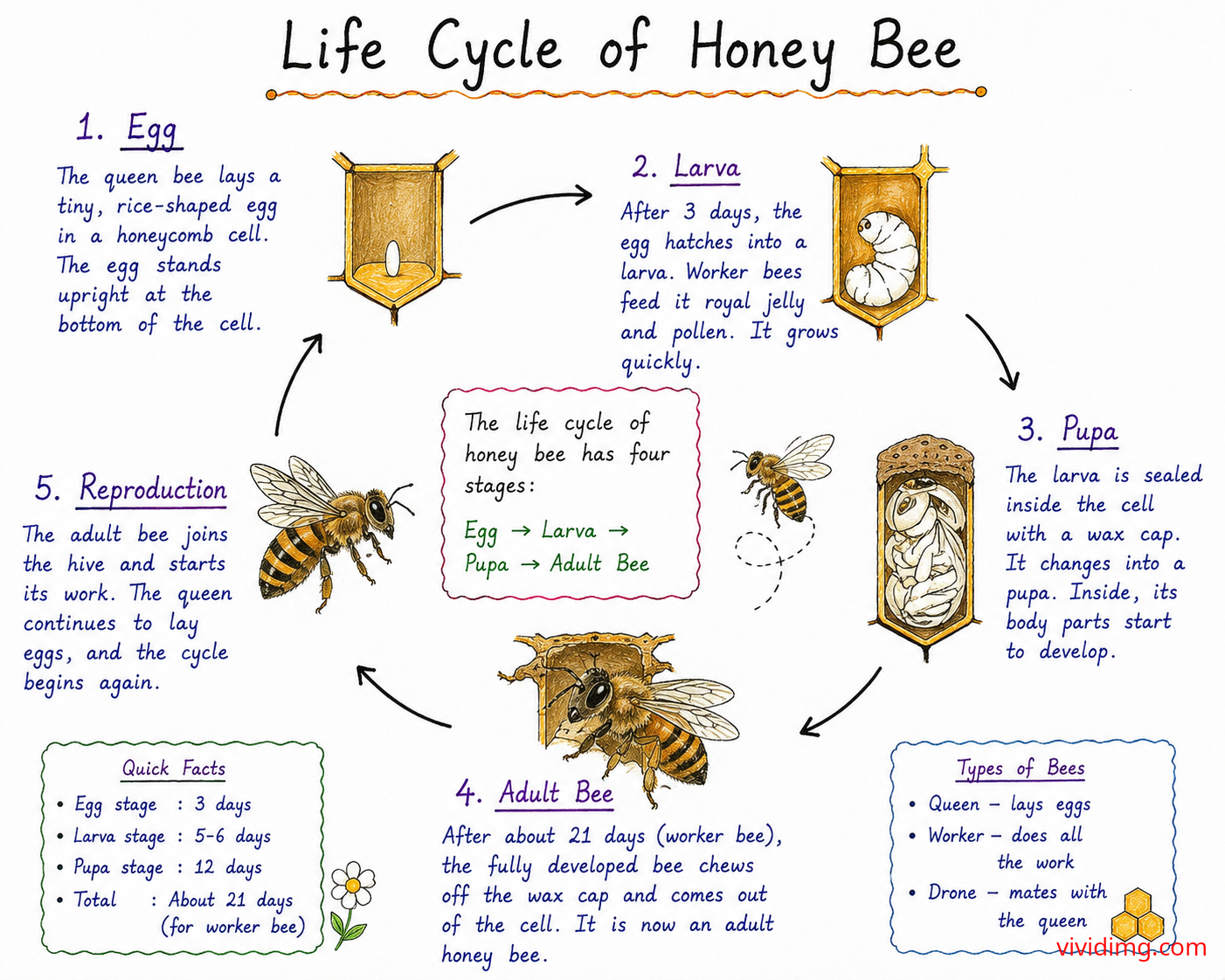
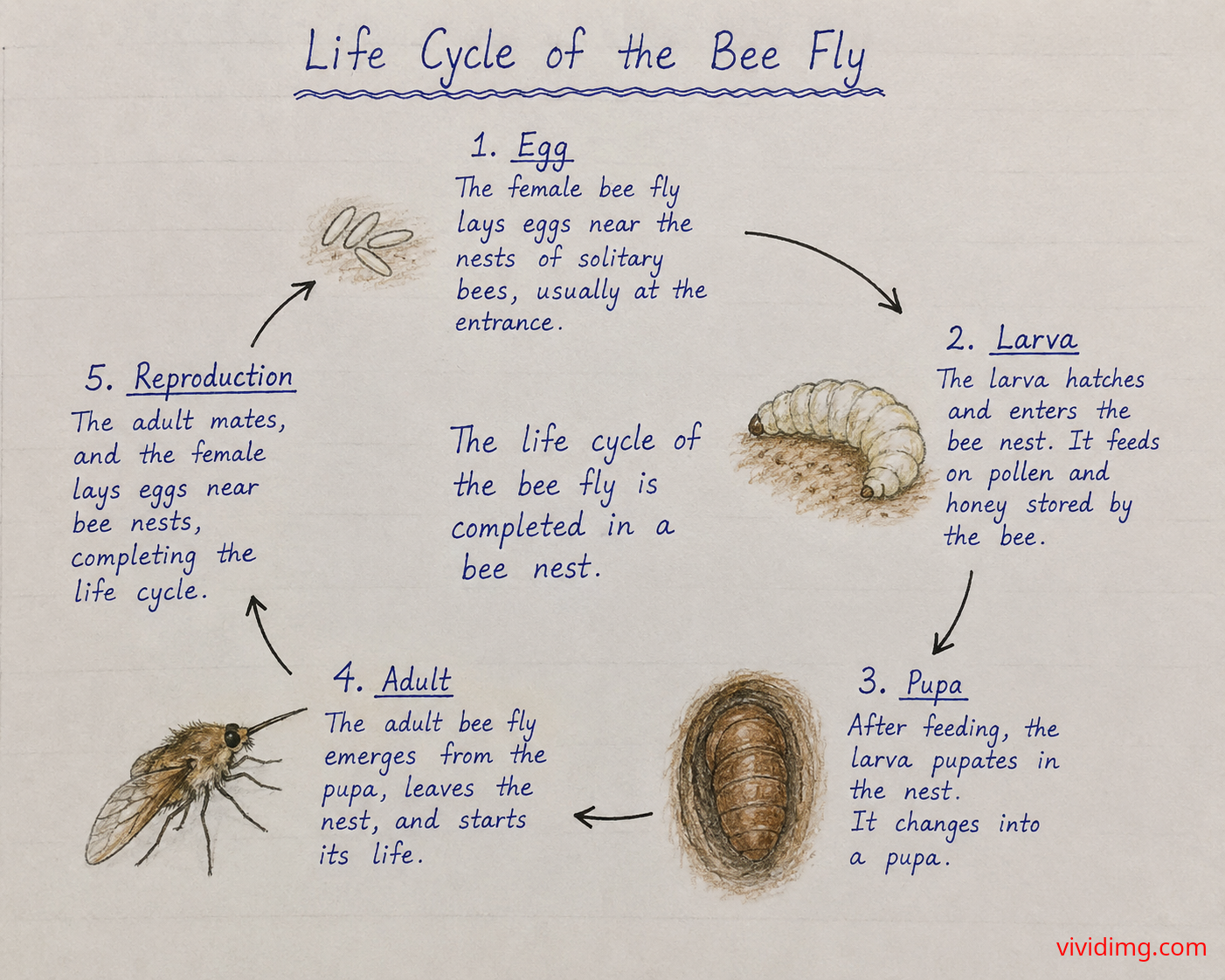
Life cycle of bees – complete stages from egg to adult
The life cycle of a bee is one of nature's most fascinating transformations, demonstrating how these remarkable pollinators grow and contribute to our ecosystem. From a tiny egg to a fully developed adult bee, each stage plays a vital role in the survival of the colony and the pollination of flowering plants. Understanding the life cycle of bees helps students, teachers, and nature enthusiasts appreciate the importance of these hardworking insects.
A bee begins its life as an egg laid by the queen inside a carefully prepared honeycomb cell. Within a few days, the egg hatches into a larva. During this stage, worker bees feed the larva with nutritious food, allowing it to grow rapidly. After several days of feeding, the larva transforms into a pupa inside a sealed cell. During the pupal stage, the bee undergoes a remarkable metamorphosis, developing wings, legs, eyes, and other adult body parts. Finally, a fully formed adult bee emerges from the cell, ready to perform its role within the hive.
Different types of bees, including worker bees, drones, and queens, have slightly different development periods, but they all follow the same four major stages: egg, larva, pupa, and adult. Each bee has a unique responsibility that helps maintain the health and productivity of the colony. Worker bees collect nectar and pollen, drones help with reproduction, and the queen lays eggs to ensure the colony continues to thrive.
This educational illustration is ideal for school assignments, classroom teaching, science projects, environmental studies, homeschooling, and general knowledge learning. It presents the complete bee life cycle in a simple, easy-to-understand format suitable for learners of all ages. By learning about bees, we also gain a deeper understanding of biodiversity, pollination, food production, and the importance of protecting these essential insects for future generations.