Shareable Image
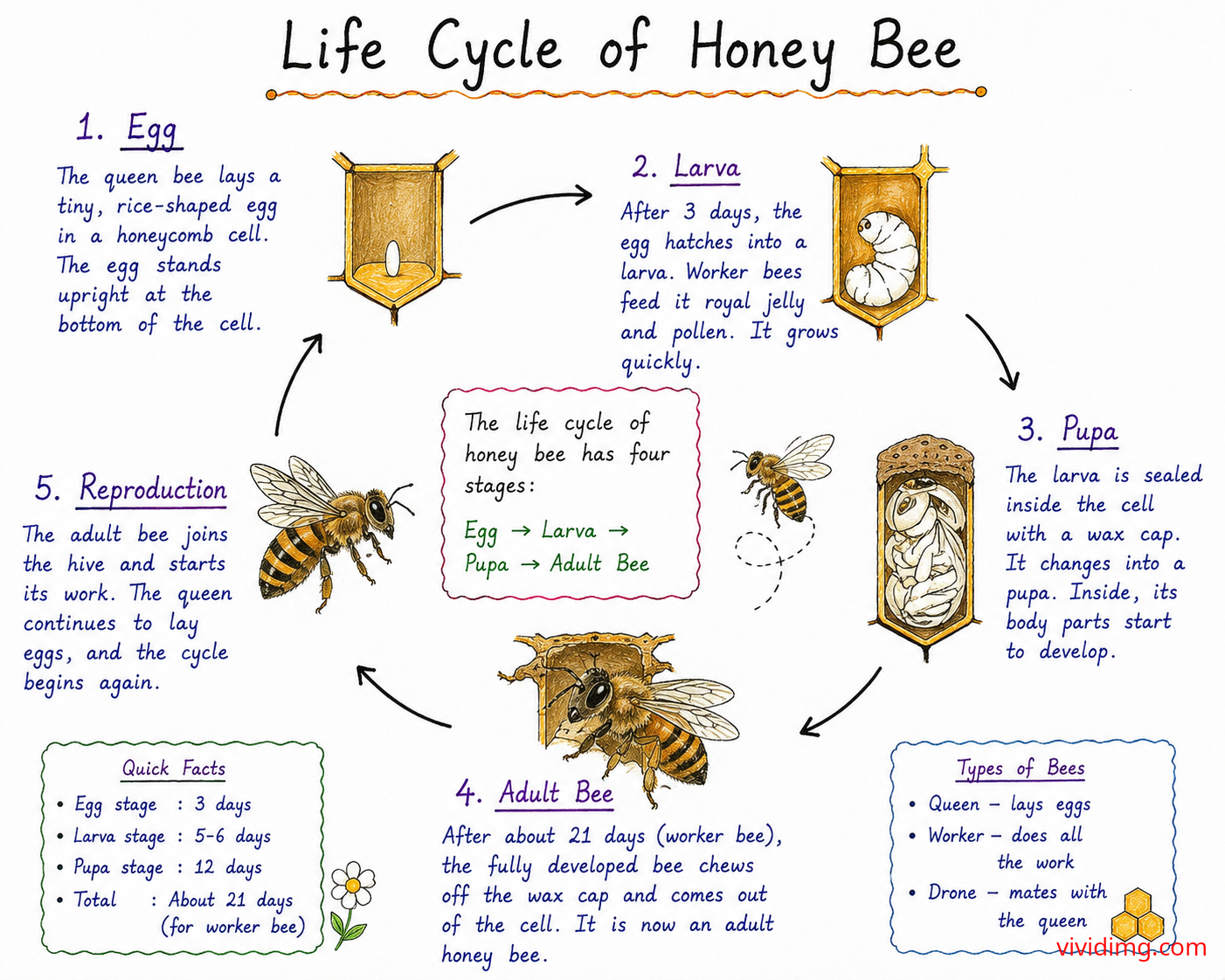
Life cycle of honey bee – complete stages from egg to adult
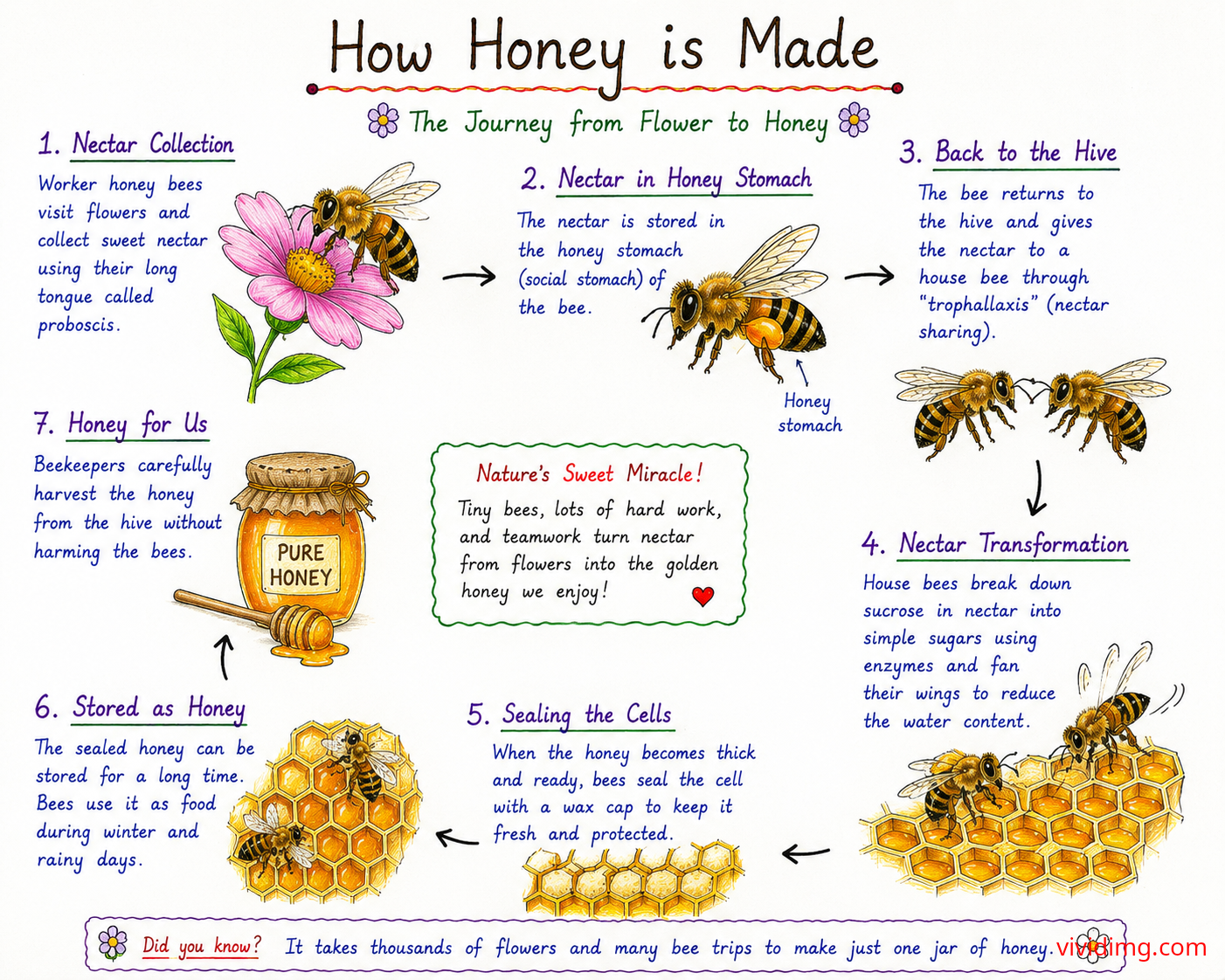
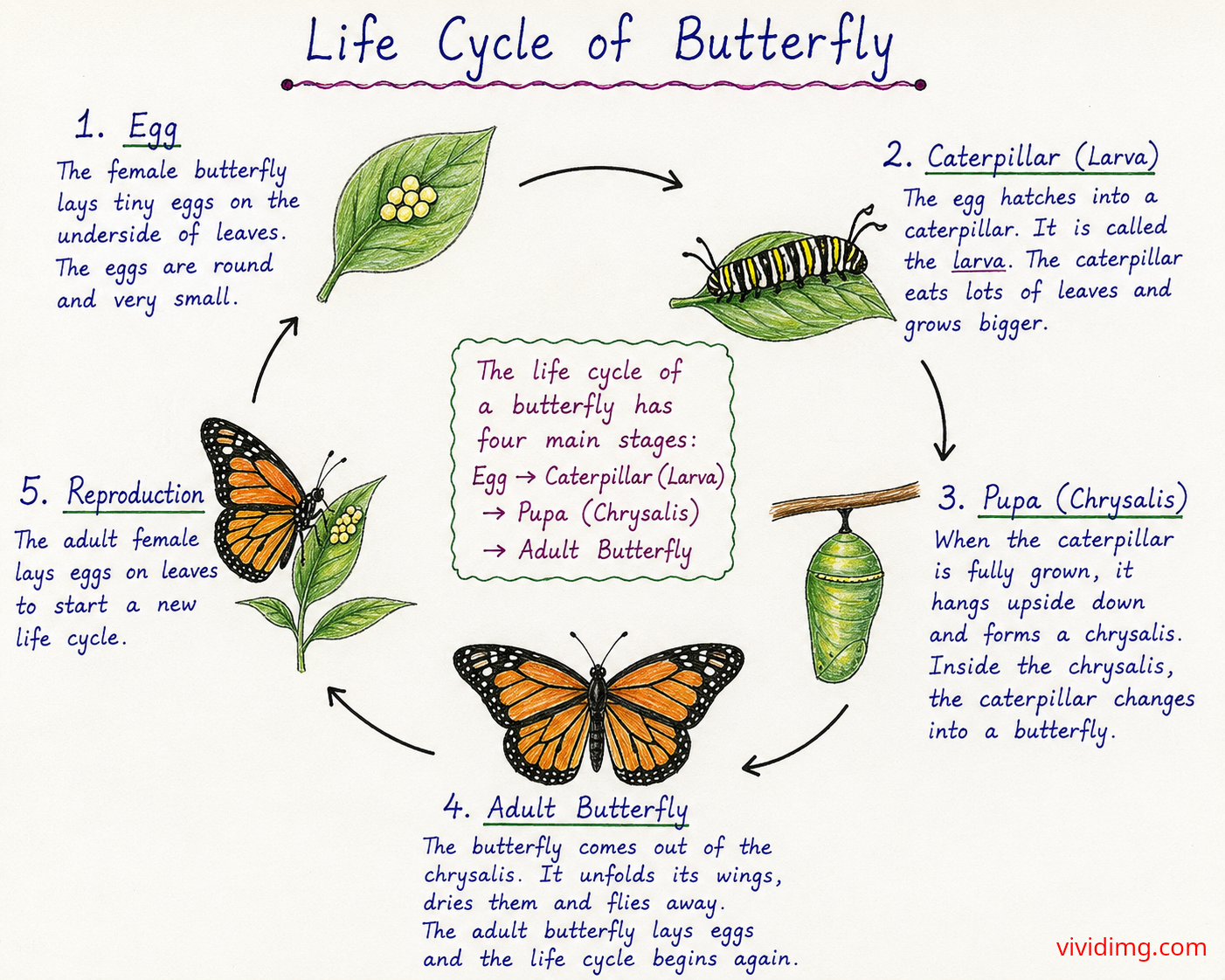
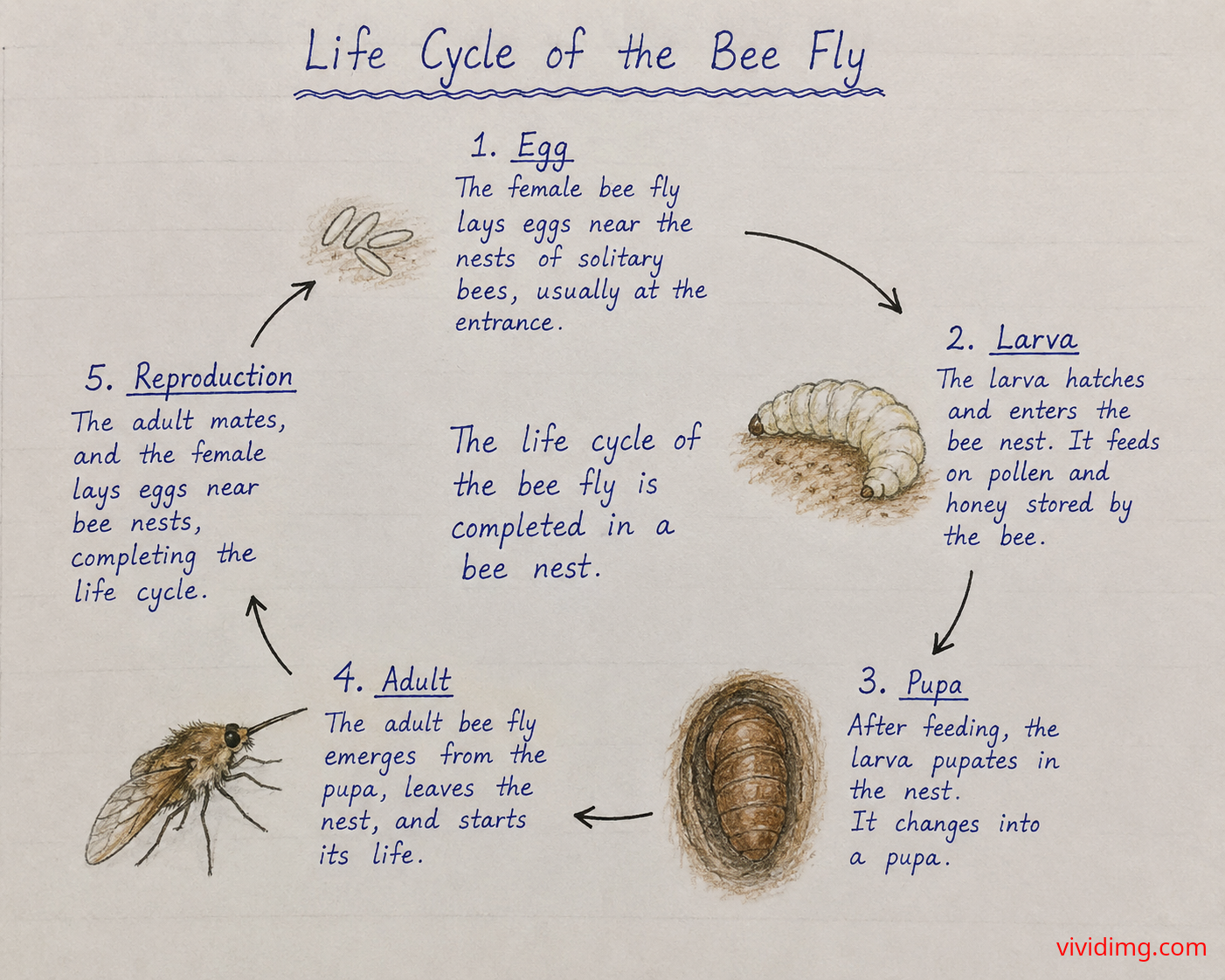
The life cycle of a honey bee is a remarkable example of nature's precision and teamwork. Honey bees are among the world's most important pollinators, helping plants produce fruits, vegetables, and seeds that support ecosystems and agriculture. This handwritten educational diagram illustrates the complete life cycle of a honey bee, making it an excellent learning resource for students, teachers, parents, and anyone interested in biology and environmental science.
The journey begins when the queen honey bee lays a tiny egg inside a wax honeycomb cell. After a few days, the egg hatches into a larva. During this stage, worker bees carefully feed the larva with nutrient-rich food, allowing it to grow rapidly. Once the larva reaches its full size, the cell is sealed with a wax cap, and the larva transforms into a pupa. Inside the protective cell, the honey bee undergoes complete metamorphosis, developing its wings, legs, eyes, and other adult body parts.
After the transformation is complete, the adult honey bee chews through the wax cap and emerges from the honeycomb cell. Depending on whether it becomes a worker bee, drone, or queen, each honey bee performs a specific role that helps the colony survive. Worker bees collect nectar and pollen, build honeycombs, care for young bees, and protect the hive. Drones mate with the queen, while the queen continues laying eggs to ensure the colony thrives.
Learning about the life cycle of a honey bee helps children understand concepts such as insect development, pollination, biodiversity, and the importance of protecting beneficial insects. Honey bees play a vital role in maintaining healthy ecosystems and supporting global food production, making them one of the most valuable insects on Earth.
This handwritten life cycle chart is ideal for science lessons, biology classrooms, school assignments, environmental studies, homeschooling, educational displays, and project work. Its simple illustrations and easy-to-read explanations help learners of all ages understand each developmental stage while encouraging curiosity about the natural world and the essential role honey bees play in our environment.