Shareable Image
How honey is made – the amazing journey from flower to honey
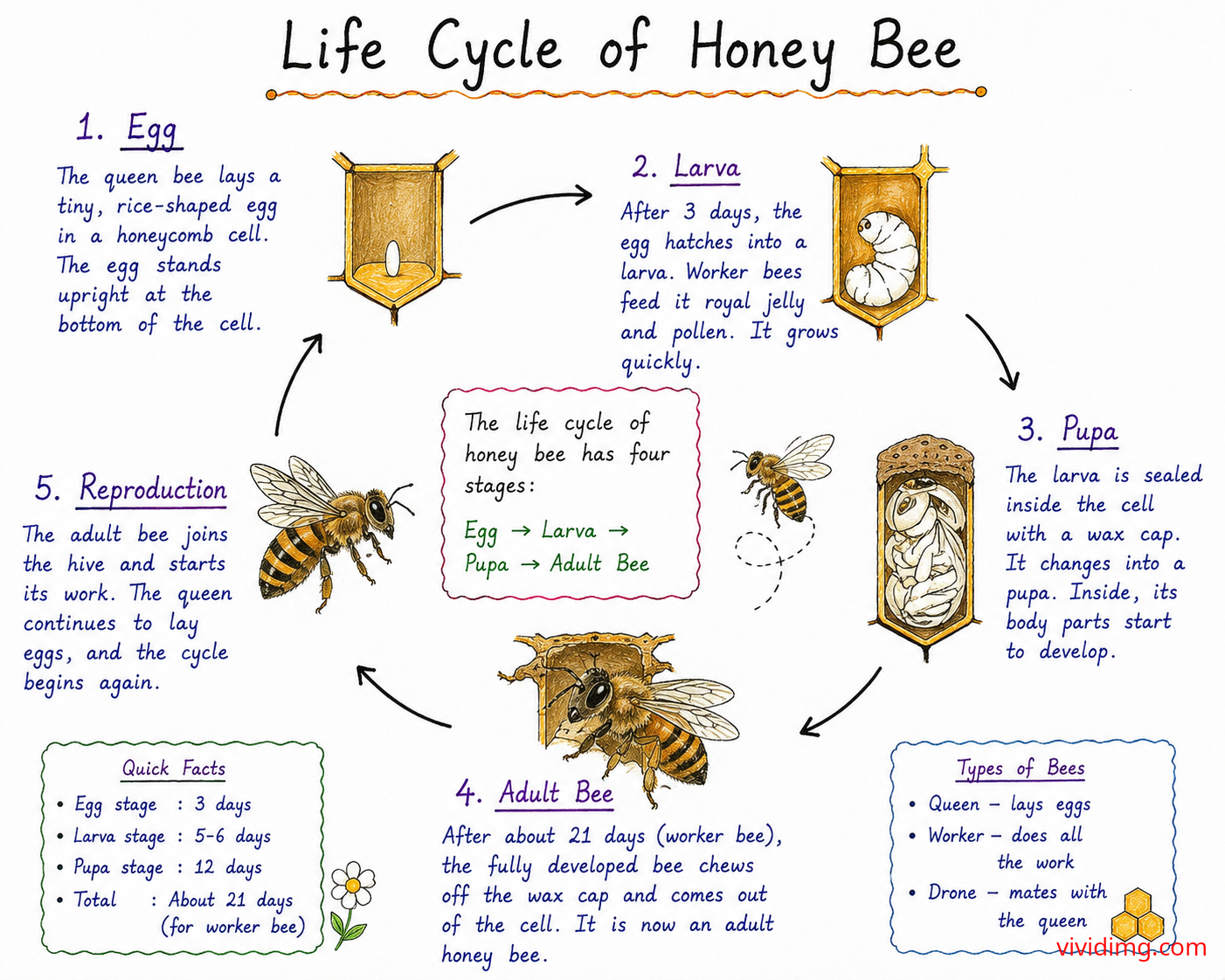
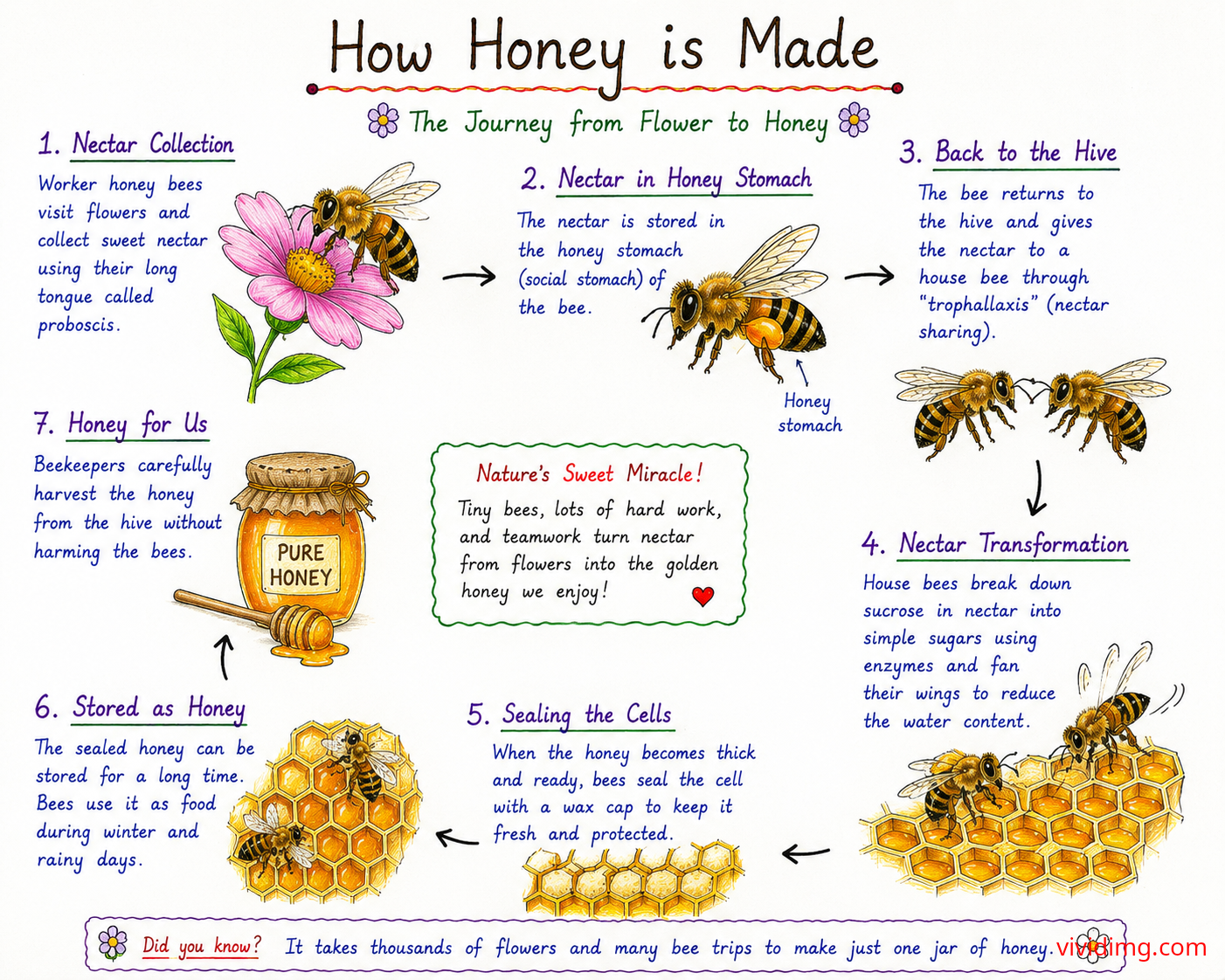
Honey is one of nature's sweetest gifts, created through the remarkable teamwork and dedication of honey bees. The process of making honey is both fascinating and essential to our environment, combining pollination, nectar collection, and natural food preservation. This handwritten educational illustration explains each step in a simple and engaging way, making it an excellent learning resource for students, teachers, parents, and nature enthusiasts.
The journey begins when worker honey bees visit blooming flowers to collect nectar using their long tongue, known as a proboscis. The nectar is stored in a special honey stomach, where natural enzymes begin breaking down complex sugars into simpler forms. Once the bee returns to the hive, it passes the nectar to other worker bees through a process called trophallaxis. This teamwork ensures the nectar is processed efficiently before being stored inside the honeycomb.
Inside the hive, worker bees continue transforming the nectar by repeatedly passing it between bees and fanning their wings to remove excess moisture. As the water content decreases, the nectar gradually thickens into the rich golden honey we know. When the honey reaches the correct consistency, bees seal each honeycomb cell with a thin layer of beeswax, protecting it from moisture and allowing it to be stored safely for long periods.
Honey serves as the colony's primary food source, especially during winter and seasons when flowers are scarce. Beekeepers carefully harvest only the excess honey, ensuring the bees retain enough food to keep the colony healthy and thriving. Alongside producing honey, honey bees play a vital role in pollinating flowering plants and crops, supporting biodiversity and global food production.
This educational diagram is perfect for science classrooms, biology lessons, environmental studies, school assignments, homeschooling, and educational projects. Its handwritten style and easy-to-follow illustrations help learners understand how tiny honey bees work together to transform flower nectar into nutritious honey, inspiring a deeper appreciation for nature, teamwork, and the incredible role bees play in sustaining life on Earth.