Shareable Image
Tiger facts for kids - Animal flashcard
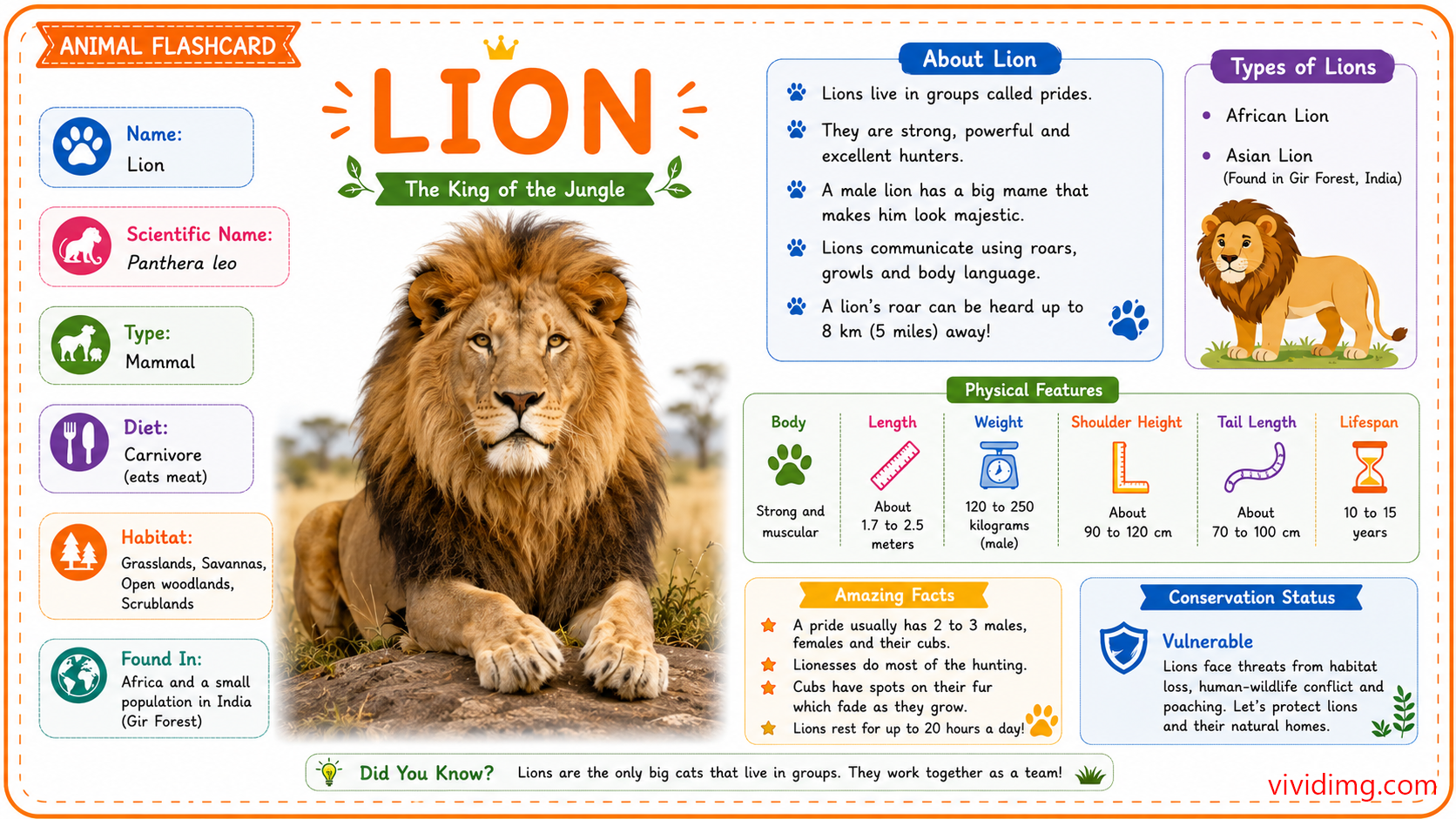
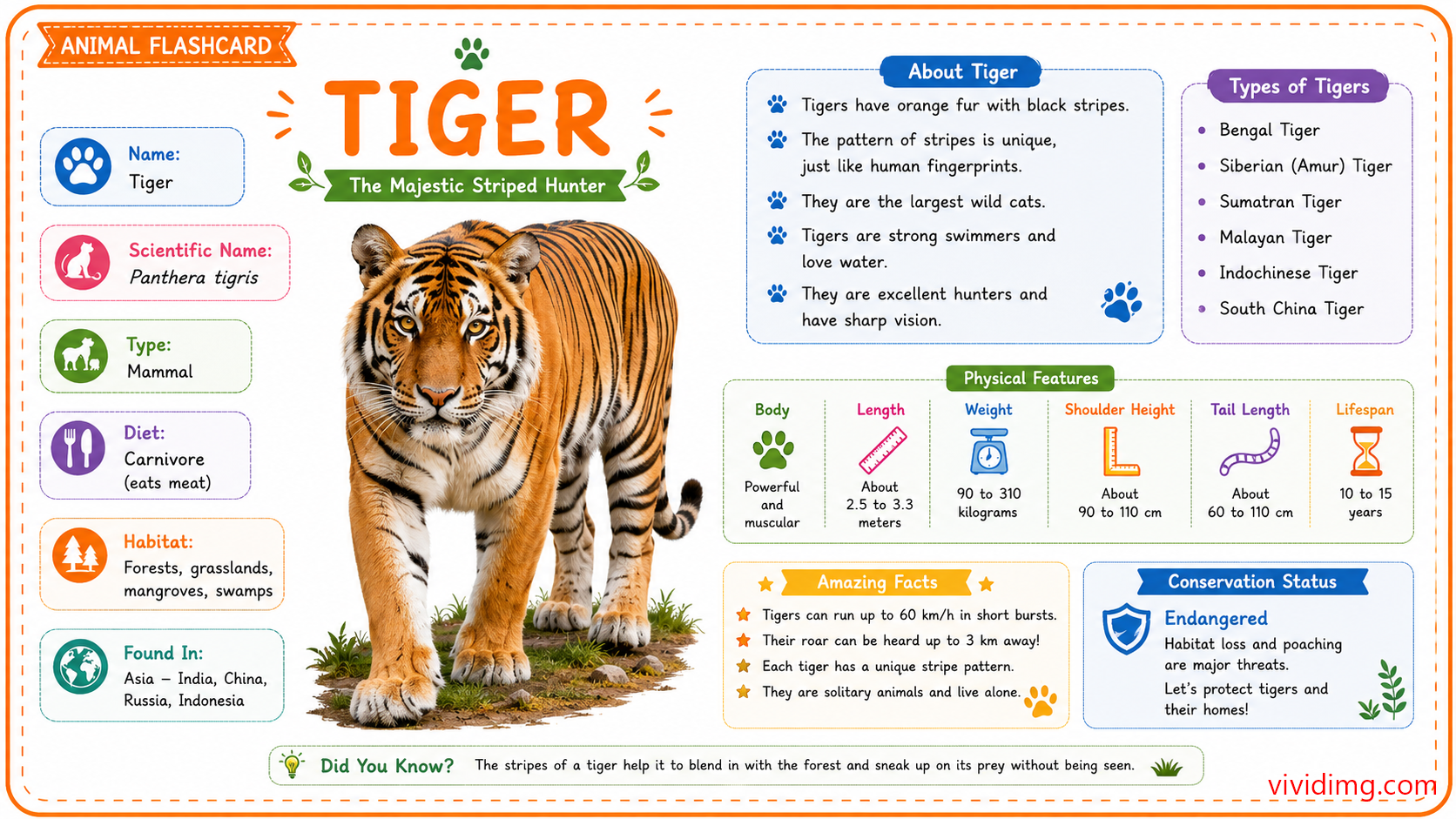
Explore the fascinating world of tigers with this detailed educational animal flashcard created to make wildlife learning interesting and easy for children. The tiger is one of the most recognizable wild animals in the world, known for its powerful body, orange coat, distinctive black stripes, and impressive hunting abilities. This flashcard introduces children to the tiger through a realistic animal image and clearly organized facts. Young learners can discover that the tiger belongs to the mammal group and is a carnivore, meaning its natural diet consists mainly of meat. Tigers are native to Asia and can live in several environments, including forests, grasslands, mangroves, and swamps. Presenting these details visually helps children connect an animal's appearance with its habitat, food habits, classification, and lifestyle.
The flashcard also introduces important physical characteristics that help children understand how remarkable a tiger can be. Depending on the population, sex, and individual animal, adult tigers vary considerably in size. Large individuals can reach around 2.5 to 3.3 meters in total length, including the tail, while body weight varies significantly among tiger populations. Tigers have muscular bodies, strong legs, sharp claws, powerful jaws, excellent senses, and long tails that assist with balance. They are also capable swimmers and are generally comfortable entering water. Tigers usually hunt alone and rely on patience, camouflage, strength, and stealth when approaching prey. Their striped coats help break up the outline of their bodies among vegetation, shadows, and tall grass. One particularly interesting fact is that every tiger has an individual stripe pattern, allowing researchers to identify different animals from photographs.
Children can also discover that several tiger subspecies survive today, including Bengal, Amur or Siberian, Sumatran, Malayan, Indochinese, and South China tigers. These tiger populations developed in different regions of Asia and can differ in average size, appearance, habitat, and geographic distribution. Tigers are generally solitary animals, with adults spending much of their lives independently and maintaining territories. They communicate using scent markings, scratches, vocalizations, and other signals. As major predators, tigers also have an important role in the ecosystems where they live. Learning about these behaviors gives children a broader understanding of how wild animals survive and interact with their natural environment rather than simply teaching them to recognize an animal by its appearance.
This educational tiger flashcard also provides an opportunity to introduce children to wildlife conservation. Tigers are classified as endangered, and their wild populations have declined dramatically from their historical numbers and distribution. Habitat destruction, forest fragmentation, poaching, illegal wildlife trade, and conflict between people and wildlife remain important threats. Teaching children about these challenges can encourage curiosity and respect for wildlife and nature. This printable-style learning resource is suitable for preschool activities, kindergarten lessons, primary school projects, homeschooling, wildlife studies, classroom discussions, animal identification activities, and general knowledge practice. Combining realistic imagery, clearly separated information sections, physical characteristics, interesting facts, and conservation awareness makes this tiger flashcard a useful educational resource for helping young learners discover one of the world's most extraordinary big cats.