Shareable Image
Life cycle of a sunflower – from seed to beautiful flower
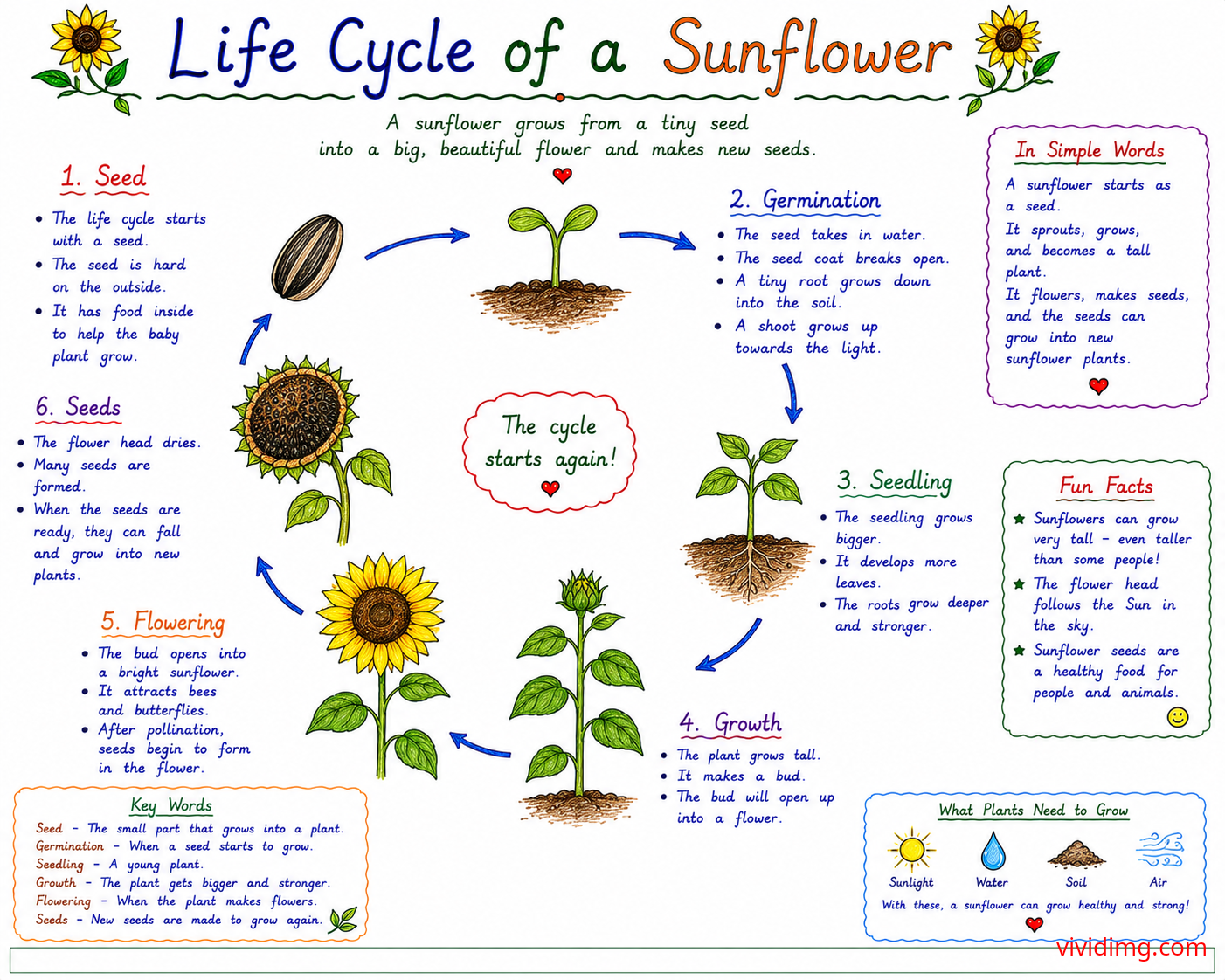
The life cycle of a sunflower is a wonderful example of how a tiny seed can develop into a tall, beautiful flowering plant and eventually produce new seeds for the next generation. This colorful handwritten educational diagram explains the complete sunflower life cycle through six easy-to-understand stages: seed, germination, seedling, growth, flowering, and seed formation.
The journey begins with the seed stage . A sunflower seed contains the young plant and stored nutrients needed to begin its development. When the seed receives suitable conditions such as water, warmth, air, and healthy soil, germination begins. The seed coat opens, a small root grows downward into the soil, and a young shoot starts growing upward toward the light.
The emerging plant then enters the seedling stage . Small green leaves develop while the root system grows deeper and stronger. The young sunflower uses sunlight, water, air, and nutrients from the soil to continue developing. As it enters the growth stage , its stem becomes taller and stronger, more leaves appear, and eventually a flower bud begins to form.
During the flowering stage , the bud opens into the familiar bright yellow sunflower. The flower attracts pollinators such as bees and butterflies. Pollination helps the sunflower produce seeds within its large flower head. As the flower matures and begins to dry, numerous sunflower seeds develop and become ready for dispersal or collection.
These mature seeds represent the final stage of the cycle, but they also mark the beginning of a new one. Under suitable conditions, some seeds can germinate and grow into new sunflower plants, allowing the life cycle to continue.
The handwritten illustration presents each stage with colorful drawings, directional arrows, simple explanations, keywords, and interesting facts. It also highlights the basic things plants need to grow, including sunlight, water, soil, and air, helping children connect the sunflower life cycle with broader concepts in plant science.
This educational sunflower life cycle chart is ideal for science lessons, biology activities, school projects, classroom displays, homeschooling, environmental studies, and plant-growth activities. Its visual, handwritten format makes the different stages easier for young learners to understand and remember while encouraging them to explore how plants grow, reproduce, and contribute to the natural environment.