Shareable Image
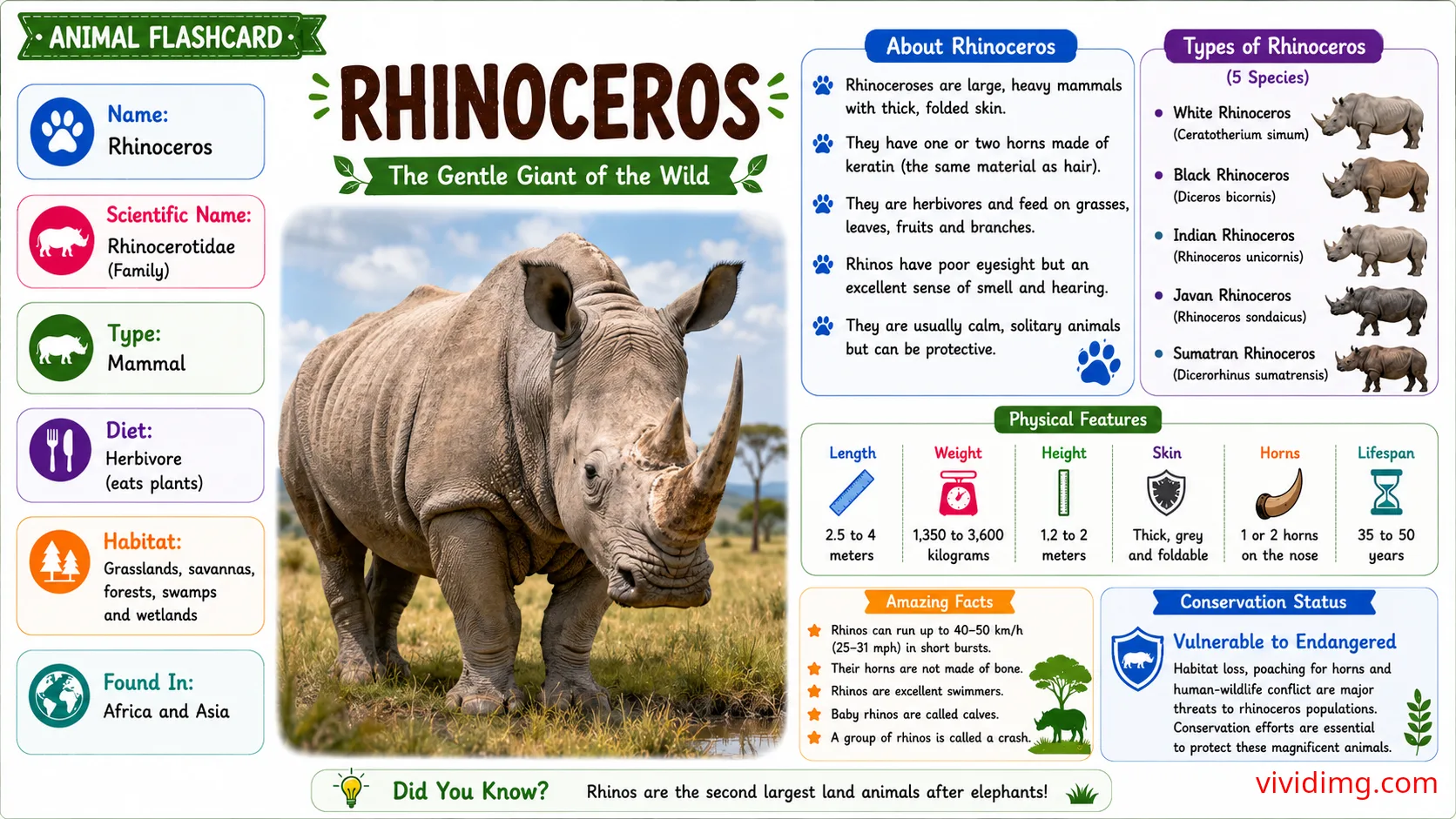
Rhinoceros facts for kids - Animal flashcard
Discover the incredible world of rhinoceroses with this detailed educational animal flashcard created especially for children, students, teachers, and wildlife lovers. Rhinoceroses, commonly called rhinos, are among the largest land mammals on Earth and are famous for their thick skin, massive bodies, and distinctive horns. They belong to the family Rhinocerotidae and are herbivores, feeding mainly on grasses, leaves, shoots, fruits, and branches depending on the species. Rhinos are found in parts of Africa and Asia, where they inhabit grasslands, savannas, forests, wetlands, and tropical woodlands. Although they appear slow and bulky, rhinoceroses are surprisingly agile and can run at impressive speeds over short distances. Their poor eyesight is compensated by an excellent sense of smell and keen hearing, helping them detect predators and other animals long before they come into view. This educational flashcard introduces children to the rhinoceros through realistic imagery and carefully organized facts covering its classification, habitat, diet, physical characteristics, behavior, species, and conservation status.
One of the rhinoceros' most recognizable features is its horn. Contrary to popular belief, a rhino's horn is not made of bone but consists mainly of keratin, the same protein found in human hair and fingernails. Depending on the species, rhinoceroses may have one or two horns that continue growing throughout their lives. Rhinos possess thick, protective skin that can appear like natural armor, yet the skin is sensitive to insect bites and sunburn. They often roll in mud to cool themselves, protect against parasites, and shield their skin from the sun. Their large bodies are supported by strong legs and broad feet, allowing them to move across a variety of terrains. Rhinos are usually solitary animals, although mothers stay with their calves for several years while teaching them survival skills. They communicate through vocal sounds, scent markings, and body language. Despite their enormous size, rhinoceroses are generally peaceful animals that prefer avoiding conflict unless they feel threatened or are protecting their young.
Today, five living rhinoceros species remain on Earth: the White Rhinoceros, Black Rhinoceros, Indian Rhinoceros, Javan Rhinoceros, and Sumatran Rhinoceros. Each species has adapted to different environments and has unique physical features. White rhinos are the largest and primarily graze on grasses, while black rhinos mainly browse leaves and shrubs using their pointed lips. Indian rhinos are easily recognized by their thick, folded skin that resembles armor plates. Javan and Sumatran rhinos are among the rarest large mammals in the world, with only very small populations remaining in protected habitats. Baby rhinoceroses are called calves and stay close to their mothers until they become independent. Rhinos play an important ecological role by shaping vegetation, dispersing seeds, and maintaining healthy ecosystems that benefit many other plants and animals sharing their habitat.
Unfortunately, rhinoceroses face serious threats across their natural range. Illegal poaching driven by the demand for rhino horns remains one of the greatest dangers, despite scientific evidence proving that the horn has no medicinal value. Habitat destruction, expanding agriculture, human-wildlife conflict, and small isolated populations also threaten their survival. Several rhinoceros species are now classified as Critically Endangered, while others remain Vulnerable or Near Threatened depending on the population. Conservation organizations around the world work tirelessly to protect rhinos through anti-poaching patrols, wildlife reserves, breeding programs, habitat restoration, scientific research, and public education. This educational rhinoceros flashcard is an excellent learning resource for preschool and kindergarten activities, primary school science lessons, homeschooling, wildlife education, classroom projects, zoo learning, and general knowledge studies. By combining realistic photography with fascinating facts about anatomy, behavior, species diversity, habitats, and conservation, this flashcard encourages children to appreciate one of Earth's most extraordinary mammals while inspiring future generations to help protect endangered wildlife.