Shareable Image
How crude oil gives a variety of products – understanding petroleum refining
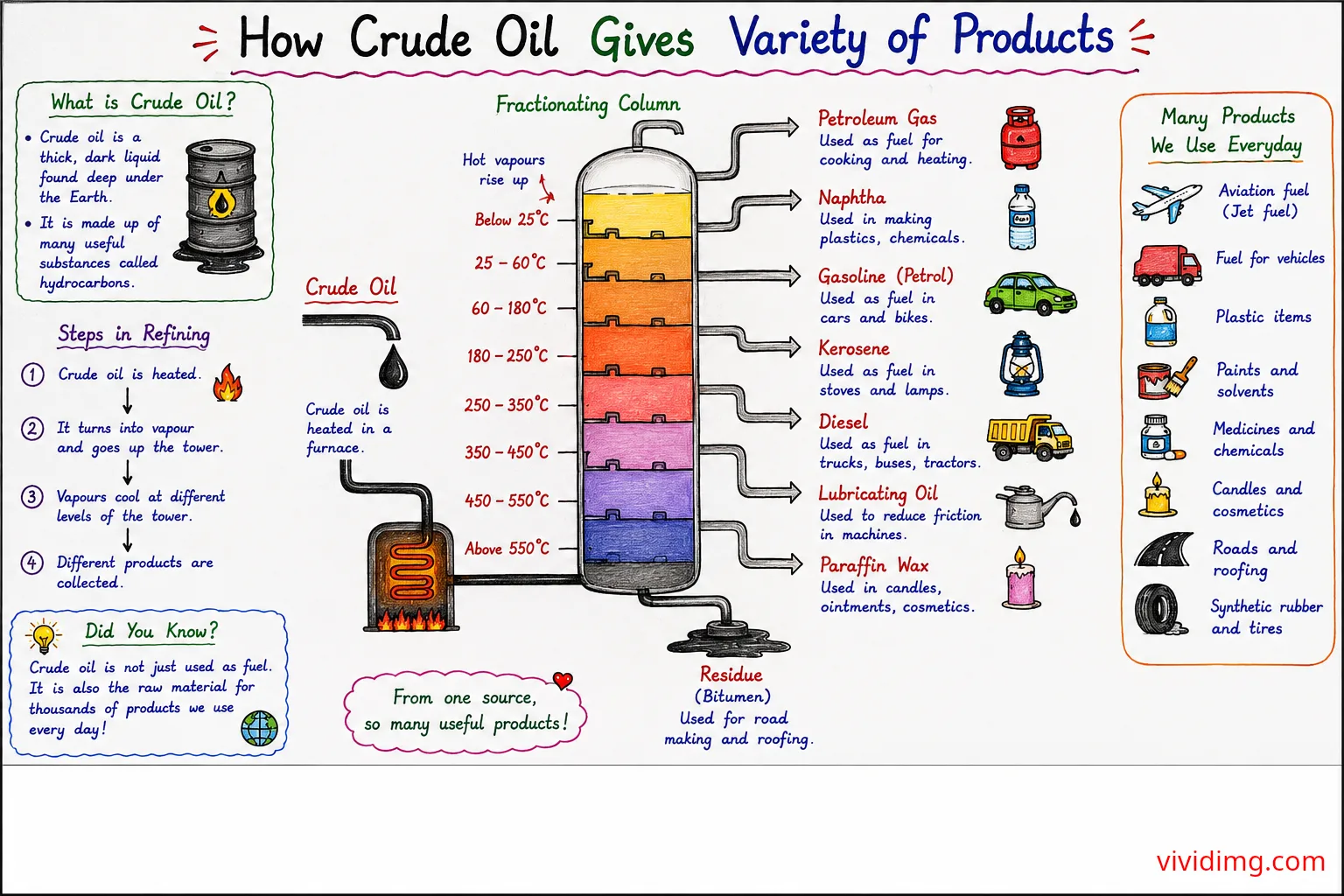
Crude oil is one of the world's most valuable natural resources because it serves as the starting material for thousands of everyday products. This handwritten educational infographic explains how crude oil is refined into different petroleum products through a process called fractional distillation. Using colorful illustrations, a fractionating column, and simple step-by-step explanations, the chart helps students understand how one natural resource can produce fuels, chemicals, lubricants, and many other useful materials.
The refining process begins when crude oil is heated inside a furnace until it becomes a mixture of hot vapors. These vapors enter a fractionating column, where the temperature gradually decreases from the bottom to the top. As the vapors cool, different hydrocarbons condense at different temperature levels because each has a different boiling point. This separation process allows valuable products such as petroleum gas, naphtha, gasoline (petrol), kerosene, diesel, lubricating oil, paraffin wax, and bitumen to be collected individually.
Each refined product has a specific purpose in our daily lives. Petroleum gas is commonly used for cooking and heating, gasoline powers cars and motorcycles, diesel fuels trucks, buses, and heavy machinery, while kerosene is used in aviation and some heating applications. Lubricating oils reduce friction in engines and industrial machines, paraffin wax is used in candles, cosmetics, and medical products, and bitumen is an essential material for constructing roads and roofing. Naphtha also plays an important role in manufacturing plastics, synthetic fibers, chemicals, and numerous household products.
This educational chart also demonstrates that crude oil is much more than a transportation fuel. It is the foundation of countless products used every day, including plastics, medicines, paints, detergents, cosmetics, synthetic rubber, fertilizers, packaging materials, and many industrial chemicals. Understanding petroleum refining helps students appreciate the importance of chemistry, engineering, and natural resource management in modern society.
Ideal for science lessons, chemistry classes, geography, environmental studies, engineering introductions, school assignments, classroom displays, and homeschooling, this handwritten infographic makes a complex industrial process easy to understand. The visual layout, colorful drawings, and clear explanations provide learners with a strong foundation in petroleum refining while highlighting the many ways crude oil supports everyday life.