Shareable Image
Structure of a Wind Mill – parts, working principle and renewable energy explained
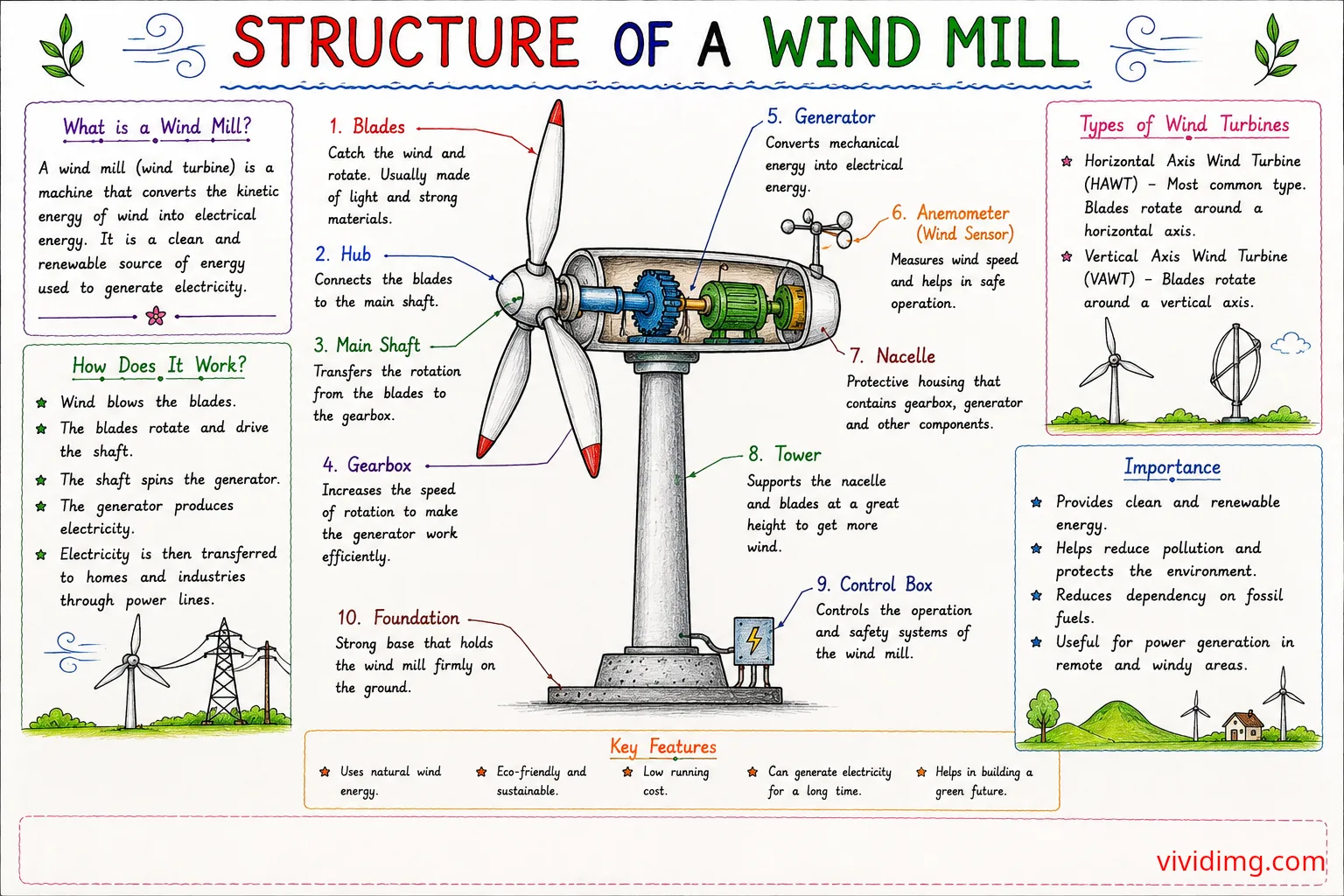
A wind mill, commonly known as a wind turbine, is a renewable energy machine that converts the kinetic energy of moving wind into electrical energy. It is one of the most environmentally friendly methods of generating electricity because it produces clean power without burning fossil fuels. This handwritten educational infographic explains the complete structure of a wind mill, its major components, working principle, and the importance of wind energy in a simple and engaging format.
The infographic clearly labels the essential parts of a modern wind turbine, including the blades, hub, main shaft, gearbox, generator, anemometer, nacelle, tower, control box, and foundation. Each component plays a vital role in the generation of electricity. The blades capture the wind's energy and begin rotating, the main shaft transfers this mechanical energy to the gearbox, which increases the rotational speed before driving the generator. The generator then converts mechanical energy into electrical energy, which is transmitted through power lines for homes, industries, and businesses.
The chart also explains how a wind turbine works step by step, making it easier for students to understand the complete energy conversion process. It introduces the different types of wind turbines, including Horizontal Axis Wind Turbines (HAWT) and Vertical Axis Wind Turbines (VAWT), and highlights the advantages of wind power such as clean electricity generation, reduced carbon emissions, lower operating costs, and decreased dependence on fossil fuels. Wind energy plays an important role in building a sustainable future and combating climate change.
Ideal for science classes, renewable energy lessons, environmental studies, engineering basics, STEM education, classroom displays, school projects, homeschooling, and competitive exam preparation, this handwritten educational poster combines colourful illustrations with easy-to-read handwritten notes to simplify a complex engineering concept. It encourages students to learn about clean energy technologies and understand how wind turbines contribute to a greener and more sustainable world.