Shareable Image
Structure of a Gas Cylinder – parts, working principle and safety features
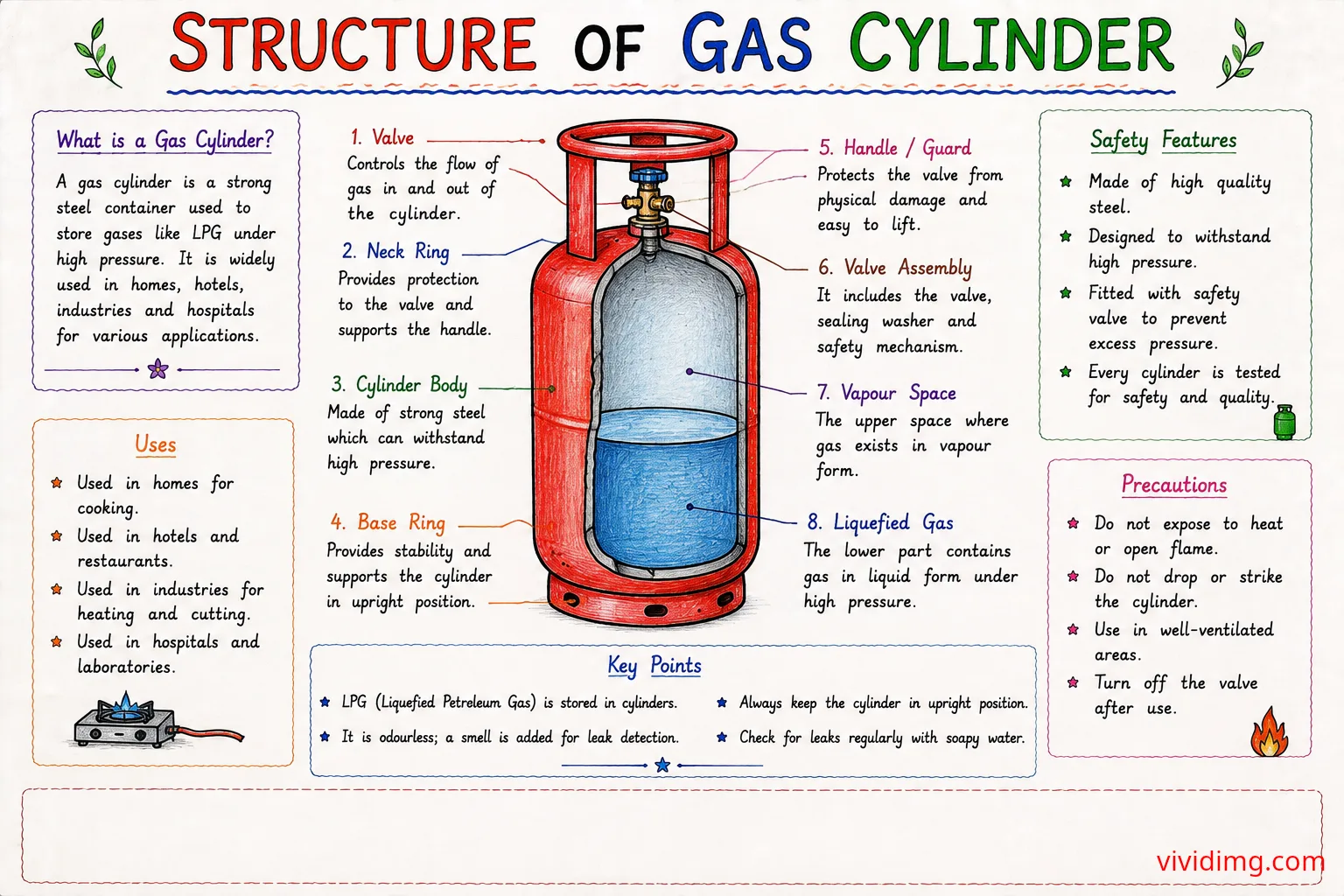
A gas cylinder is a specially designed pressure vessel used to safely store and transport gases under high pressure. LPG cylinders are commonly found in homes, restaurants, hospitals, laboratories, and industries, where they provide a reliable source of fuel for cooking, heating, and various industrial applications. This handwritten educational infographic explains the complete structure of a gas cylinder, its major components, how it stores liquefied gas, and the essential safety precautions that should always be followed.
The infographic identifies the important parts of a gas cylinder, including the valve, valve assembly, neck ring, protective handle or guard, steel cylinder body, base ring, vapour space, and the liquefied petroleum gas (LPG) stored inside. Each component serves a specific purpose in ensuring the safe storage, transportation, and controlled release of gas. The cutaway illustration also demonstrates how LPG exists in both liquid and vapour forms inside the cylinder due to high pressure, making it easier for students to understand the science behind gas storage.
In addition to the structural components, the chart highlights important safety features such as the strong steel construction, pressure-resistant design, secure valve mechanism, and quality testing performed before cylinders are supplied for public use. It also explains essential precautions, including keeping the cylinder upright, avoiding exposure to heat or open flames, checking for gas leaks using soapy water, ensuring proper ventilation, and turning off the regulator after use. These safety practices help prevent accidents and promote responsible handling of LPG cylinders.
This educational poster is ideal for science classes, chemistry lessons, engineering fundamentals, industrial safety training, classroom displays, school projects, homeschooling, and competitive exam preparation. The handwritten format, colourful illustrations, and easy-to-understand explanations make complex engineering concepts simple and engaging for learners of all ages while encouraging awareness of safe gas cylinder handling in everyday life.