Shareable Image
Structure of a Solar Panel – components, working principle and solar energy explained
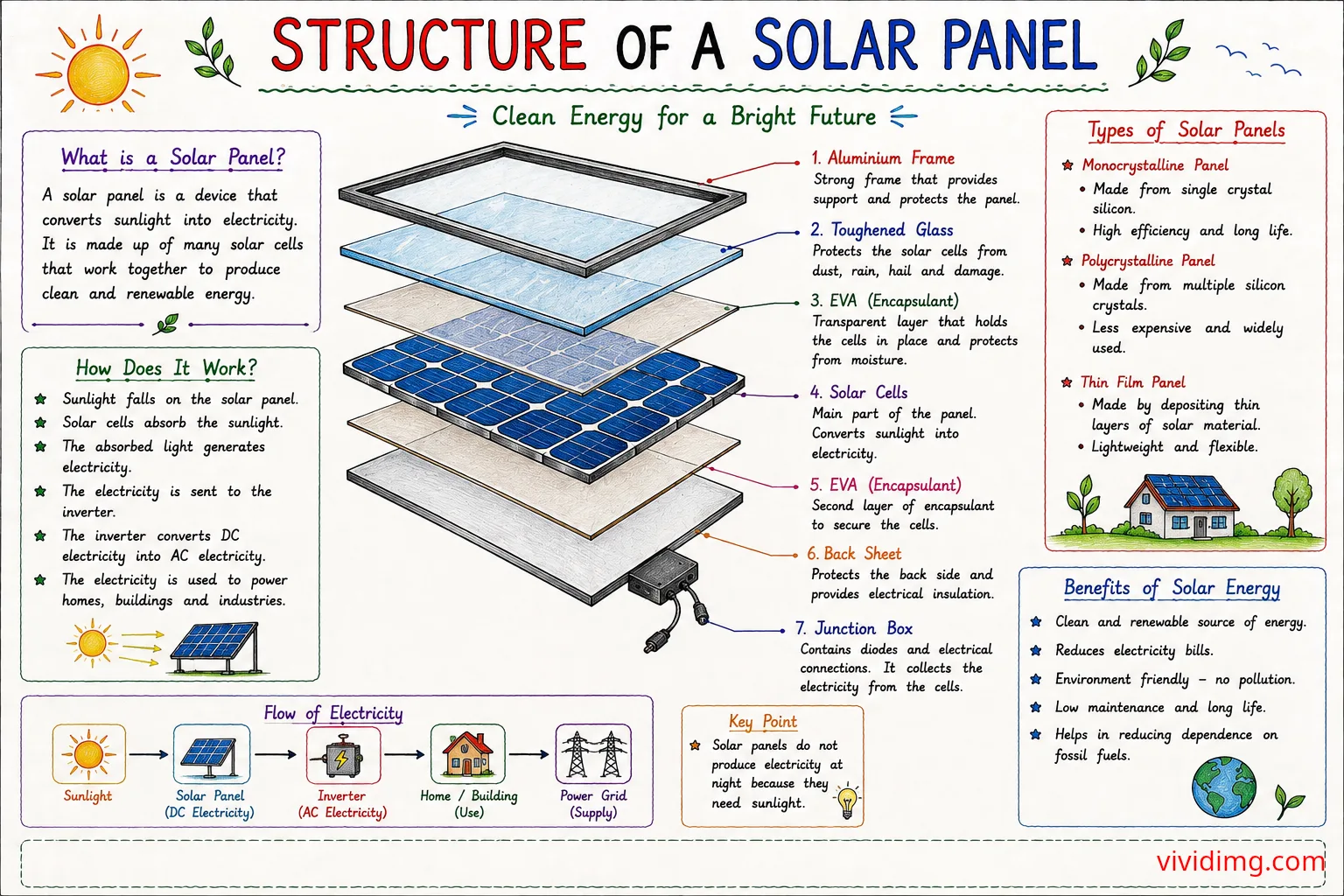
A solar panel is a renewable energy device that converts sunlight into electricity using the photovoltaic (PV) effect. It is one of the most widely adopted clean energy technologies, helping homes, businesses, and industries generate electricity while reducing dependence on fossil fuels. This handwritten educational infographic explains the complete structure of a solar panel, its individual layers, how it works, and the benefits of solar energy in an easy-to-understand visual format.
The infographic illustrates the major components of a solar panel, including the aluminium frame, toughened glass, EVA encapsulation layers, photovoltaic solar cells, protective back sheet, and junction box. Each layer has a specific purpose in ensuring durability, electrical insulation, weather protection, and efficient energy generation. The solar cells absorb sunlight and convert it into direct current (DC) electricity through the photovoltaic effect, making them the most important component of the panel.
The chart also explains the complete working process of a solar power system. Sunlight falls on the solar cells, generating DC electricity, which is then sent to an inverter. The inverter converts the DC power into alternating current (AC), making it suitable for household appliances, commercial buildings, and industrial equipment. Excess electricity can be supplied to the power grid or stored in batteries for later use, depending on the type of solar installation.
In addition to explaining the structure, the infographic introduces the common types of solar panels, including Monocrystalline, Polycrystalline, and Thin Film panels. It highlights their characteristics, efficiency, and applications while also describing the major advantages of solar energy, such as producing clean electricity, reducing electricity bills, lowering carbon emissions, requiring minimal maintenance, and promoting sustainable development. It also notes that solar panels generate electricity only when sufficient sunlight is available.
This handwritten educational chart is ideal for science lessons, renewable energy education, environmental studies, physics classes, engineering basics, STEM learning, classroom displays, school projects, homeschooling, and competitive exam preparation. The colourful illustrations, handwritten explanations, and layered cutaway diagram make it easier for students to understand the internal structure of a solar panel and appreciate the role of renewable energy in building a cleaner and greener future.