
Early learning becomes much more effective when children can see, compare, recognize, and interact with familiar objects. Young children are naturally curious, but they also have short attention spans. That is why colorful and simple worksheets can be so useful during the nursery and preschool years.
This collection includes 10 printable matching worksheets created for nursery, preschool, LKG, UKG, and kindergarten children. Each worksheet introduces a child-friendly theme such as animals, birds, fruits, vegetables, flowers, or natural habitats.
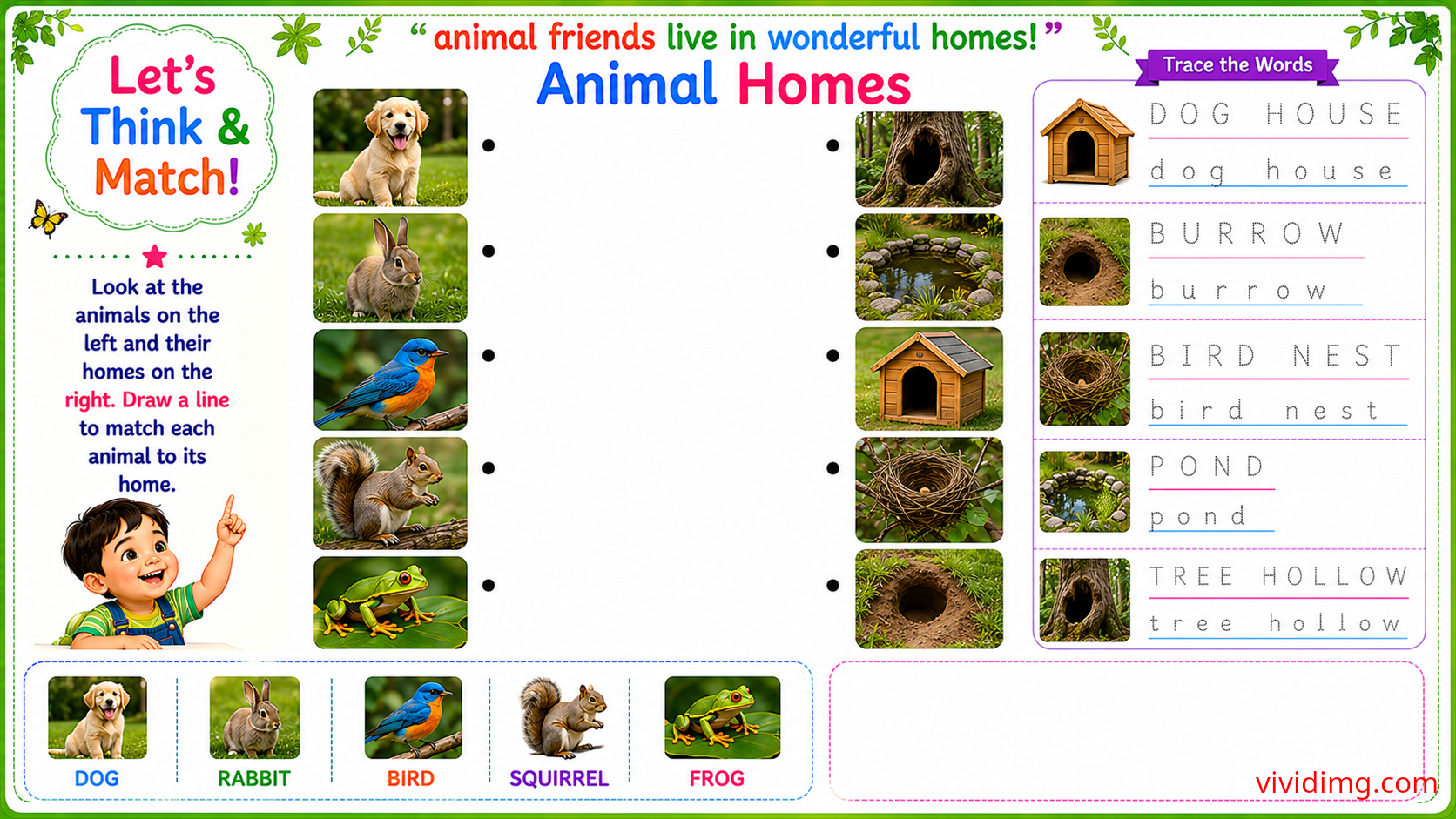
The activity is simple. Children look at the pictures shown on both sides of the worksheet and draw lines between the matching pairs. While the task feels like a small game, it quietly supports observation, memory, vocabulary, concentration, and hand-eye coordination.
Parents can use these worksheets for home learning, weekend activities, or revision. Teachers can include them in classroom sessions, activity periods, homework, or individual practice. Since every worksheet focuses on a clear topic, children can complete one activity at a time without feeling overwhelmed.
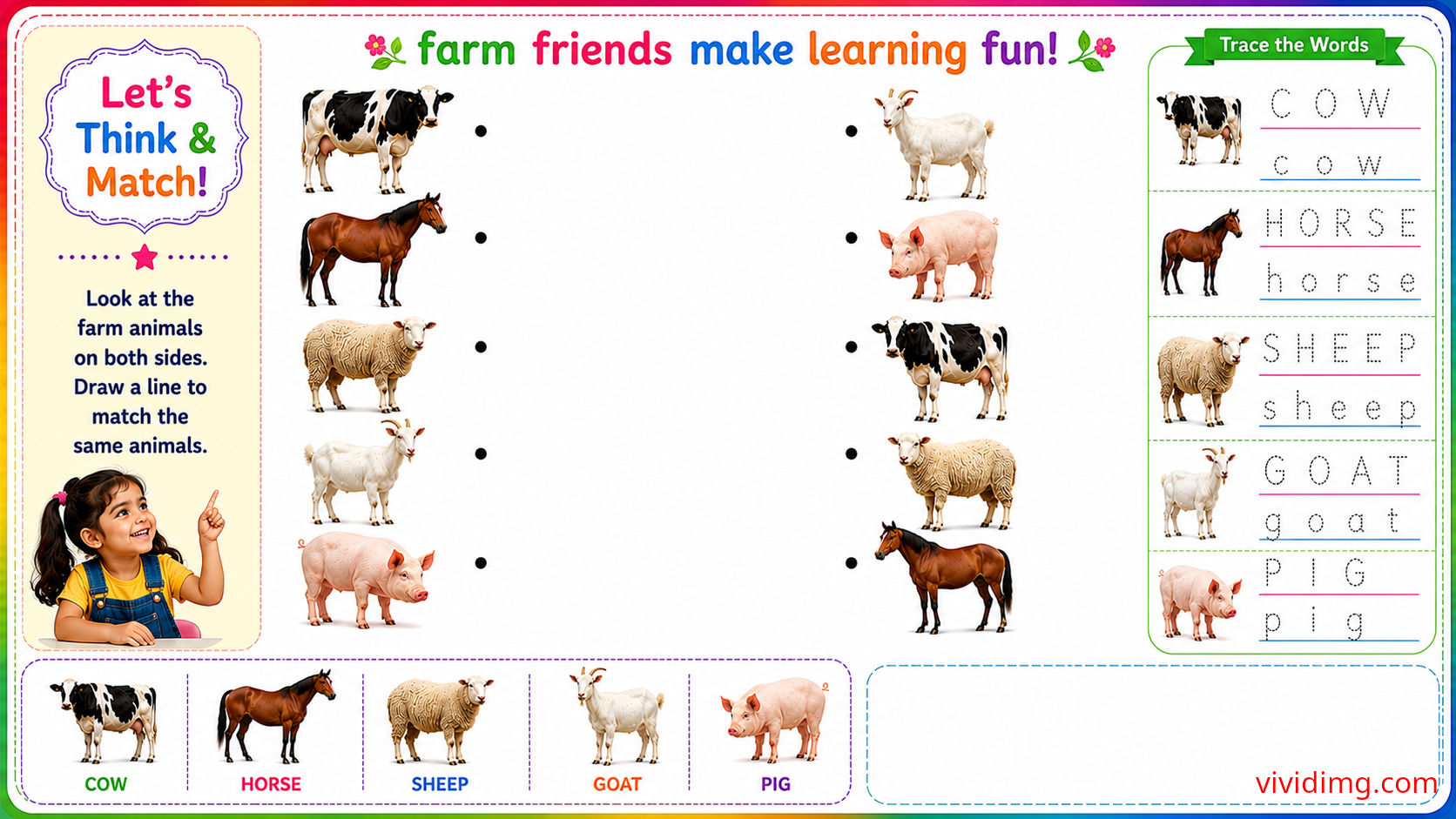
1. Farm animals worksheet
Farm animals are often among the first animals children learn to identify. Cows, horses, goats, sheep, and other familiar farm animals are commonly seen in storybooks, cartoons, village surroundings, and educational videos.
This worksheet helps children observe the shape, color, and appearance of each animal before finding its matching pair. Parents and teachers can also use the activity to introduce simple questions such as where the animal lives, what it eats, or what sound it makes.
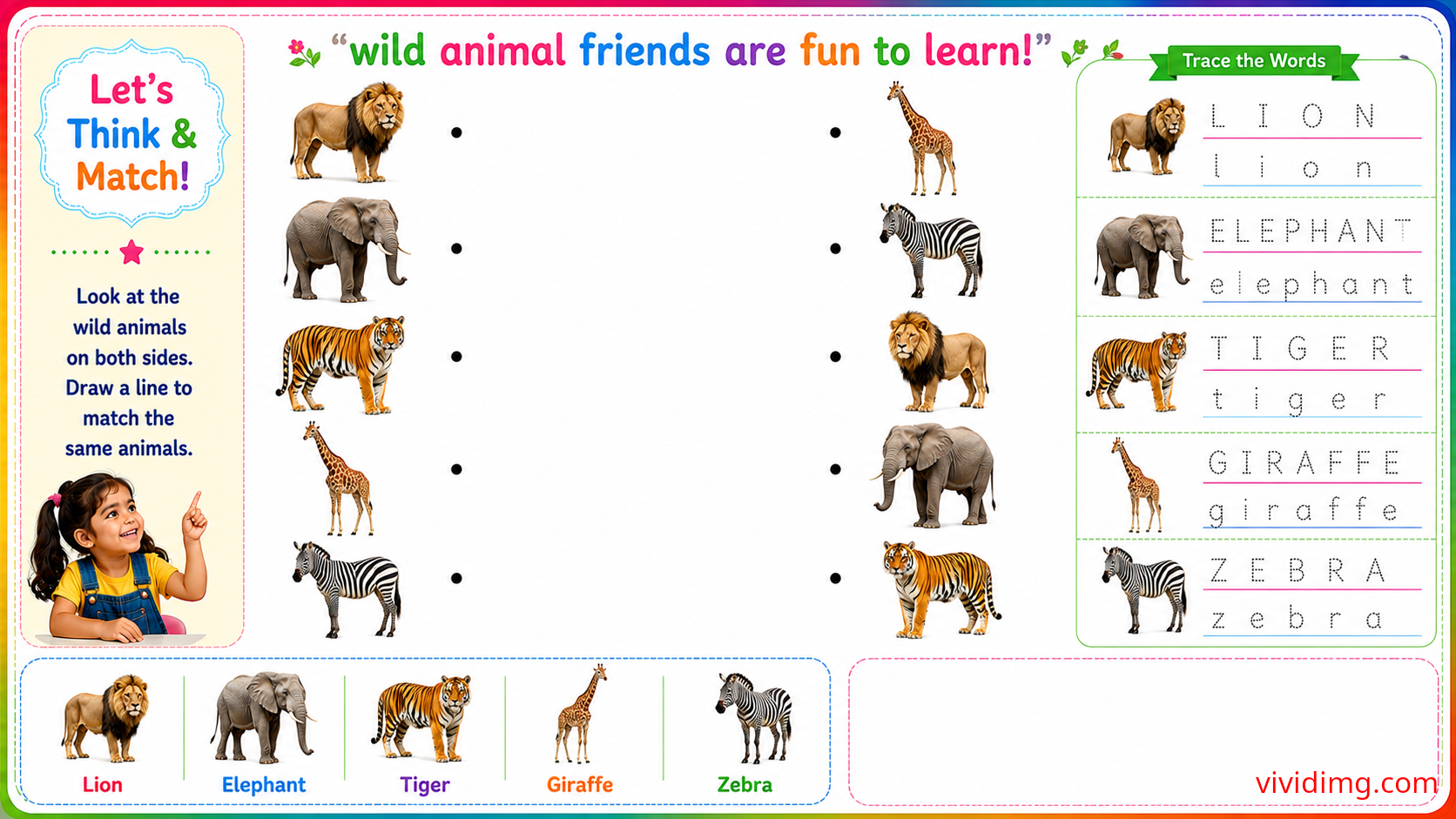
2. Wild animals worksheet
Wild animals are exciting for young children because they introduce them to forests, grasslands, and natural habitats beyond their everyday surroundings. Lions, elephants, tigers, giraffes, and other wild animals often capture a child’s attention immediately.
This matching worksheet encourages children to compare each animal carefully and identify the correct pair. It also gives parents and teachers an opportunity to talk about wildlife, animal homes, food habits, and the importance of protecting nature.
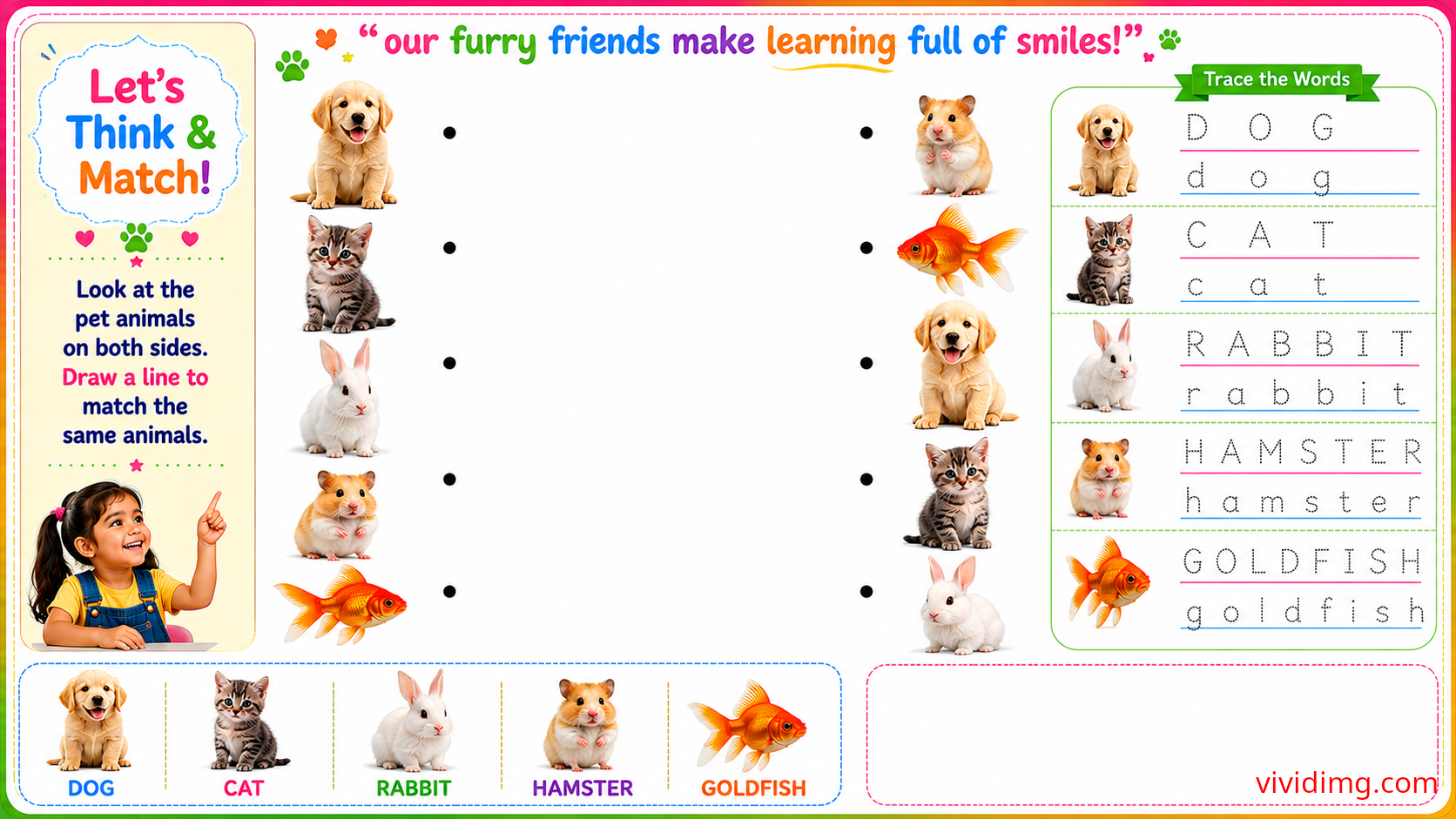
3. Sea animals worksheet
The underwater world is full of interesting creatures, making sea animals a wonderful learning topic for preschool children. Fish, turtles, whales, octopuses, and other marine animals help children discover a world that is very different from life on land.
This worksheet supports picture recognition and visual memory while introducing children to common sea animals. After completing the activity, adults can ask simple questions about which animals swim, which ones are large, or which creatures have shells, fins, or tentacles.
4. Water birds worksheet
Water birds are usually found near ponds, lakes, rivers, wetlands, and coastal areas. Ducks, swans, flamingos, cranes, and similar birds can help children understand that different birds live in different environments.
This worksheet develops observation skills by asking children to notice differences in body shape, beaks, feathers, and color. It can also begin a simple conversation about how some birds swim, some stand in shallow water, and others fly long distances.
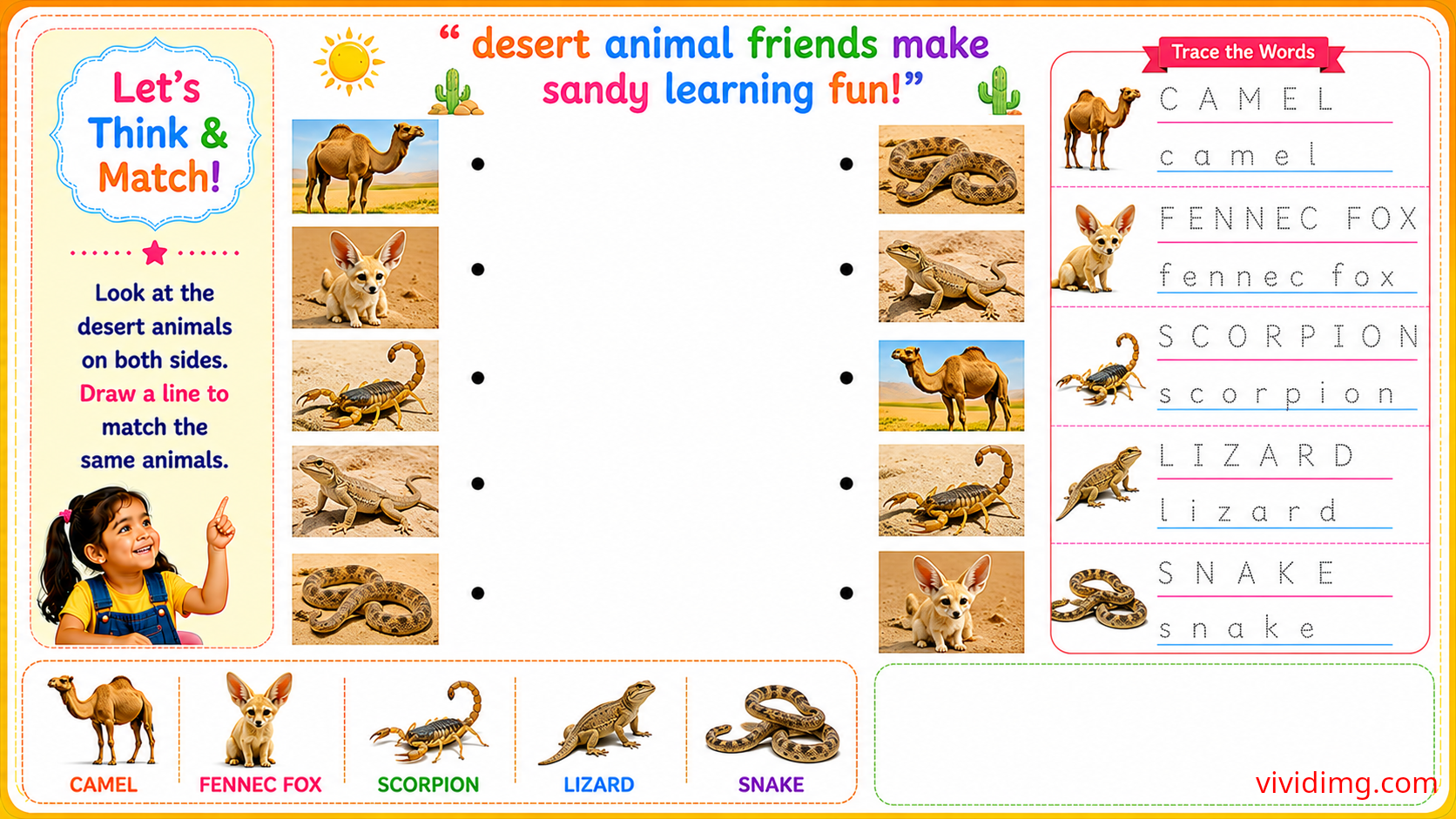
5. Desert animals worksheet
Deserts may look empty, but many animals are specially adapted to survive in hot, dry conditions. Camels, desert foxes, lizards, snakes, and other creatures have unique features that help them live with limited water and extreme temperatures.
This worksheet introduces children to a different type of natural habitat while improving matching and concentration skills. Teachers can use it to explain simple ideas such as how camels store energy, why some animals hide during the day, or how desert animals protect themselves from heat.
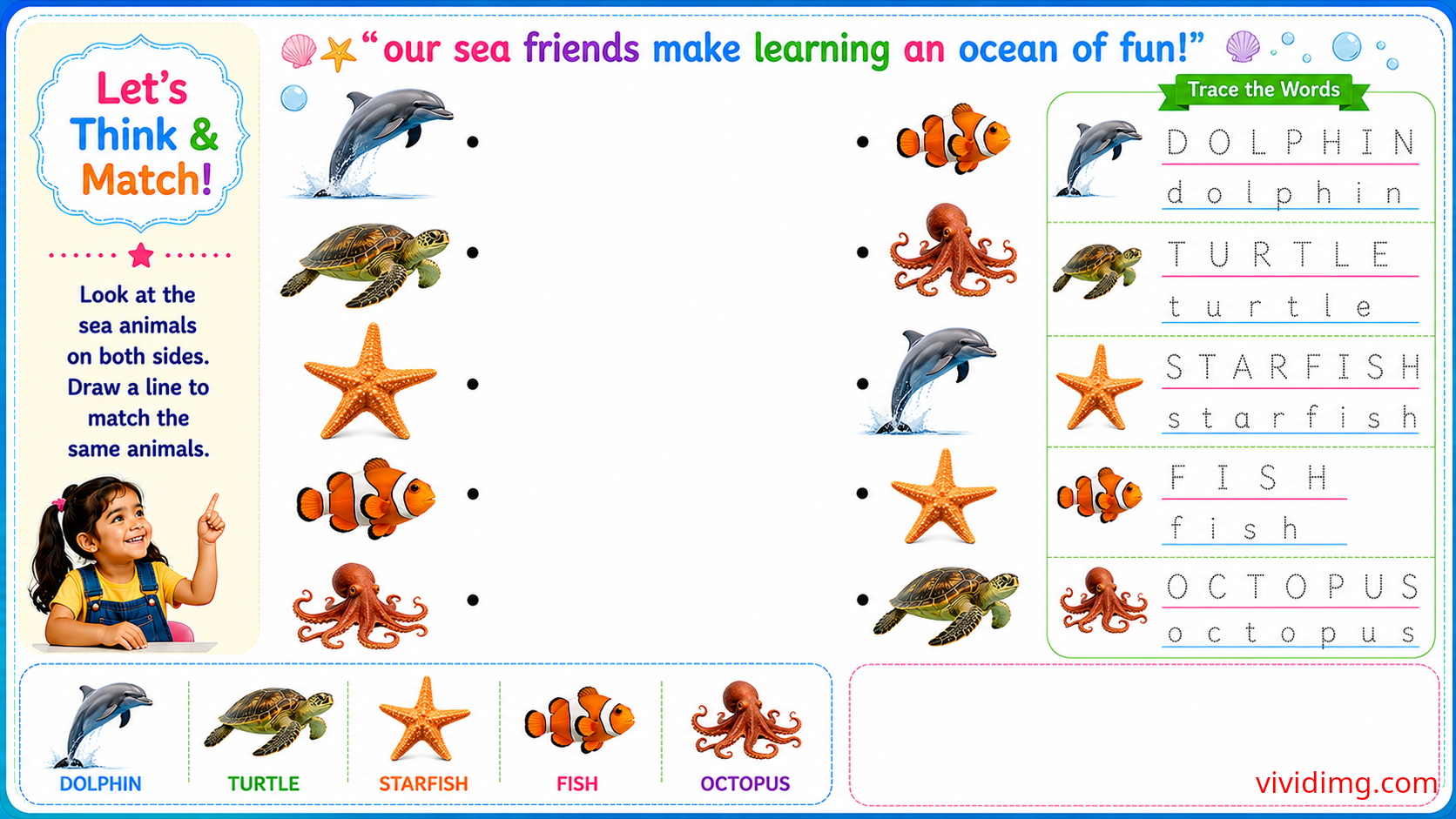
6. Arctic animals worksheet
Arctic animals live in some of the coldest places on Earth. Polar bears, seals, Arctic foxes, penguins, and other cold-region animals often have thick fur, feathers, or layers of fat to help them stay warm.
This worksheet encourages children to observe the special features of each animal and find the matching image. It also introduces simple concepts related to snow, ice, cold weather, and animal adaptation in a way that is easy for young learners to understand.
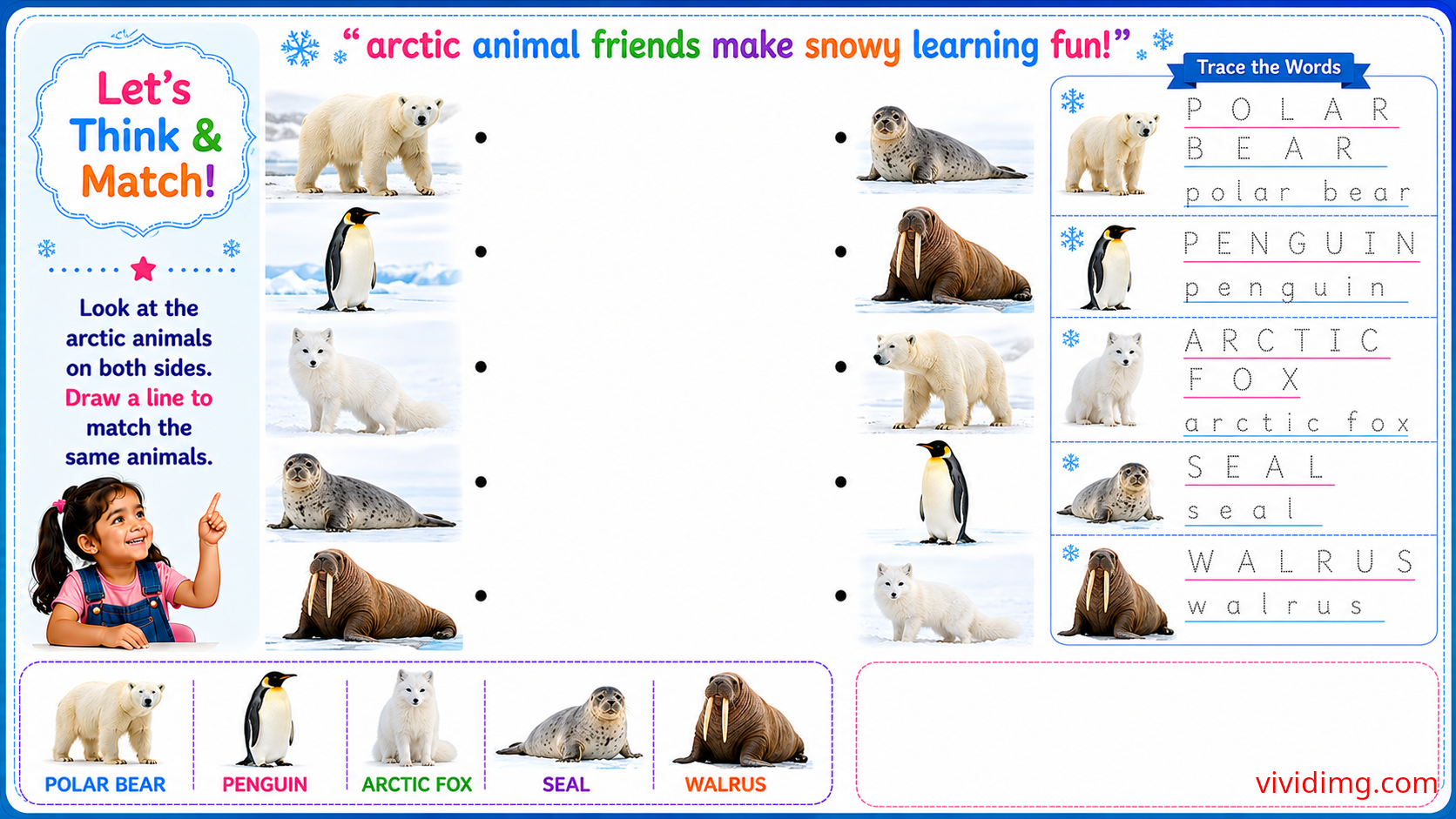
7. Fruits worksheet
Fruits are colorful, familiar, and closely connected to a child’s everyday life. Apples, bananas, oranges, grapes, and other fruits are easy to identify and make excellent subjects for early learning activities.
This worksheet helps children recognize common fruits and match the correct pictures. It can also support conversations about colors, shapes, tastes, seeds, and healthy food choices. Adults can ask children which fruit they like most or which fruits they have eaten recently.
8. Vegetables worksheet
Vegetables are another useful topic because children see them at home, in kitchens, in markets, and during meals. Learning to recognize vegetables also helps children become more familiar with healthy eating habits.
This matching worksheet introduces common vegetables through clear visual examples. Parents and teachers can extend the activity by asking children to name the vegetable, identify its color, or explain whether it grows above or below the ground.
9. Flowers worksheet
Flowers are a beautiful way to introduce children to colors, shapes, patterns, and nature. Their different petals, sizes, and bright colors naturally attract attention and encourage careful observation.
This worksheet asks children to compare the flowers and identify the matching pairs. It can also be used to discuss where flowers grow, how they smell, why bees visit them, and how plants change as they grow.
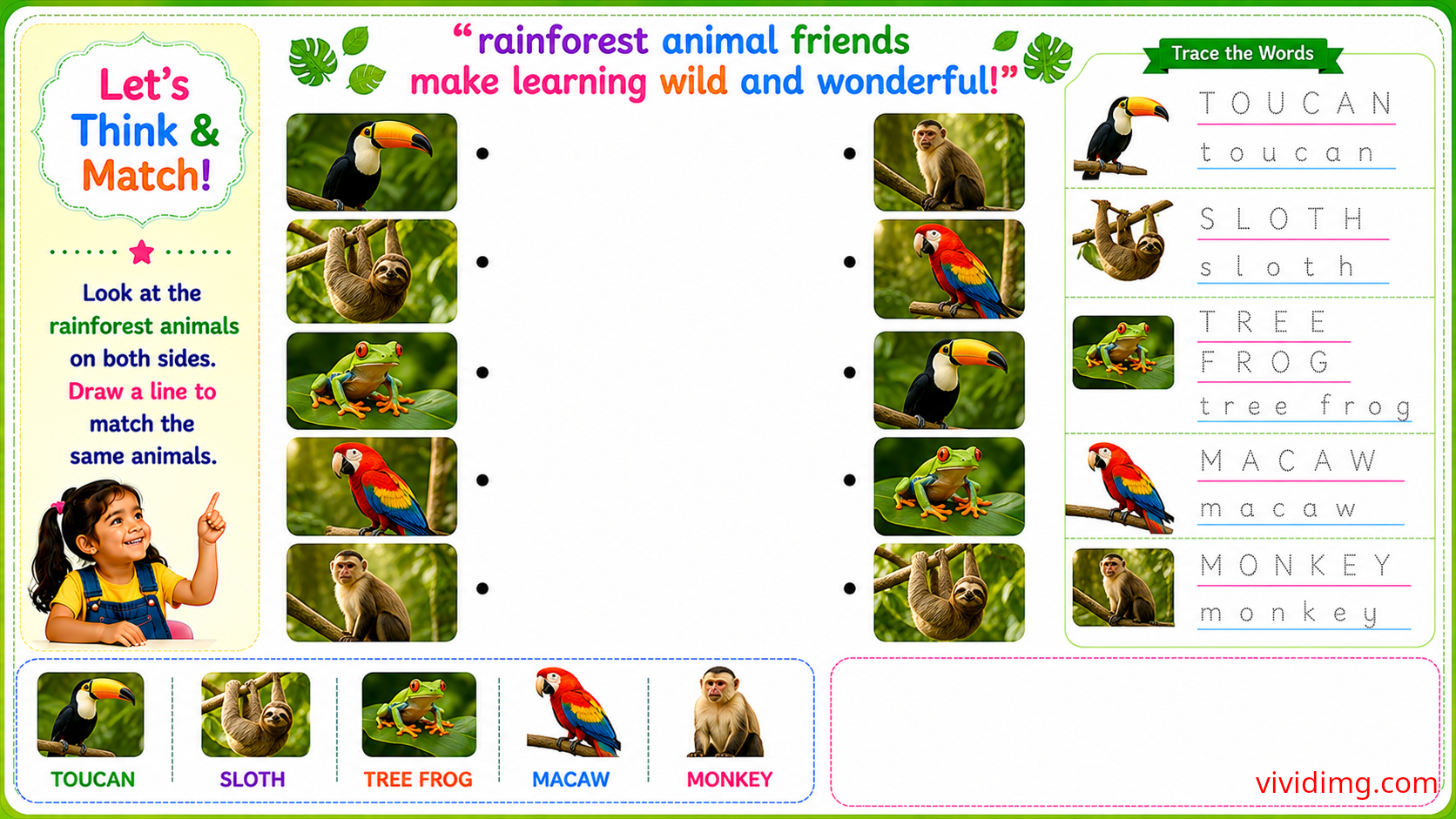
10. Birds worksheet
Birds come in many different colors, sizes, and shapes. Some birds fly high, some live near water, some stay close to people, and others are found mainly in forests or open fields.
This matching activity helps children recognize different birds by observing their beaks, feathers, body shapes, and colors. It also gives adults an opportunity to talk about nests, eggs, wings, bird sounds, and the places where birds live.
How matching worksheets support early childhood development
Matching worksheets are more than simple picture activities. To complete each exercise, a child must observe an image, remember its details, compare it with other options, and decide which picture is identical.
This small process supports several important skills that children need before moving on to more advanced reading, writing, and number activities.
- Improves visual observation and concentration
- Builds vocabulary and object recognition
- Strengthens short-term visual memory
- Develops hand-eye coordination
- Supports logical thinking and comparison
- Encourages independent decision-making
- Improves pencil control and fine motor movement
- Builds confidence through simple, achievable tasks
How parents and teachers can use these worksheets
Begin by asking the child to look at every picture and name the objects they recognize. If the child does not know a particular animal, fruit, bird, or flower, introduce the name before starting the matching activity.
Encourage children to trace the pictures with their eyes before drawing a line. This helps them slow down, observe carefully, and avoid making random choices.
Try not to correct every mistake immediately. Give a small clue and allow the child to look again. Finding the right answer independently gives children a stronger sense of achievement.
After the worksheet is complete, ask two or three simple questions related to the topic. A farm animals worksheet can lead to questions about animal sounds. A fruits worksheet can lead to a discussion about colors and taste. A birds worksheet can become a conversation about nests, feathers, and flying.
A simple and enjoyable learning collection
These 10 printable nursery worksheets provide a balanced mix of animals, birds, food items, flowers, and natural habitats. The familiar visuals keep children interested, while the matching format makes each activity easy to understand.
The worksheets can be used one by one over several days or combined into a complete activity pack. They are suitable for classroom learning, home practice, homeschooling, holiday activities, and revision sessions.
Most importantly, they help children learn without making the activity feel difficult. A simple worksheet, a few crayons, and a little encouragement can turn an ordinary learning session into something children genuinely enjoy.