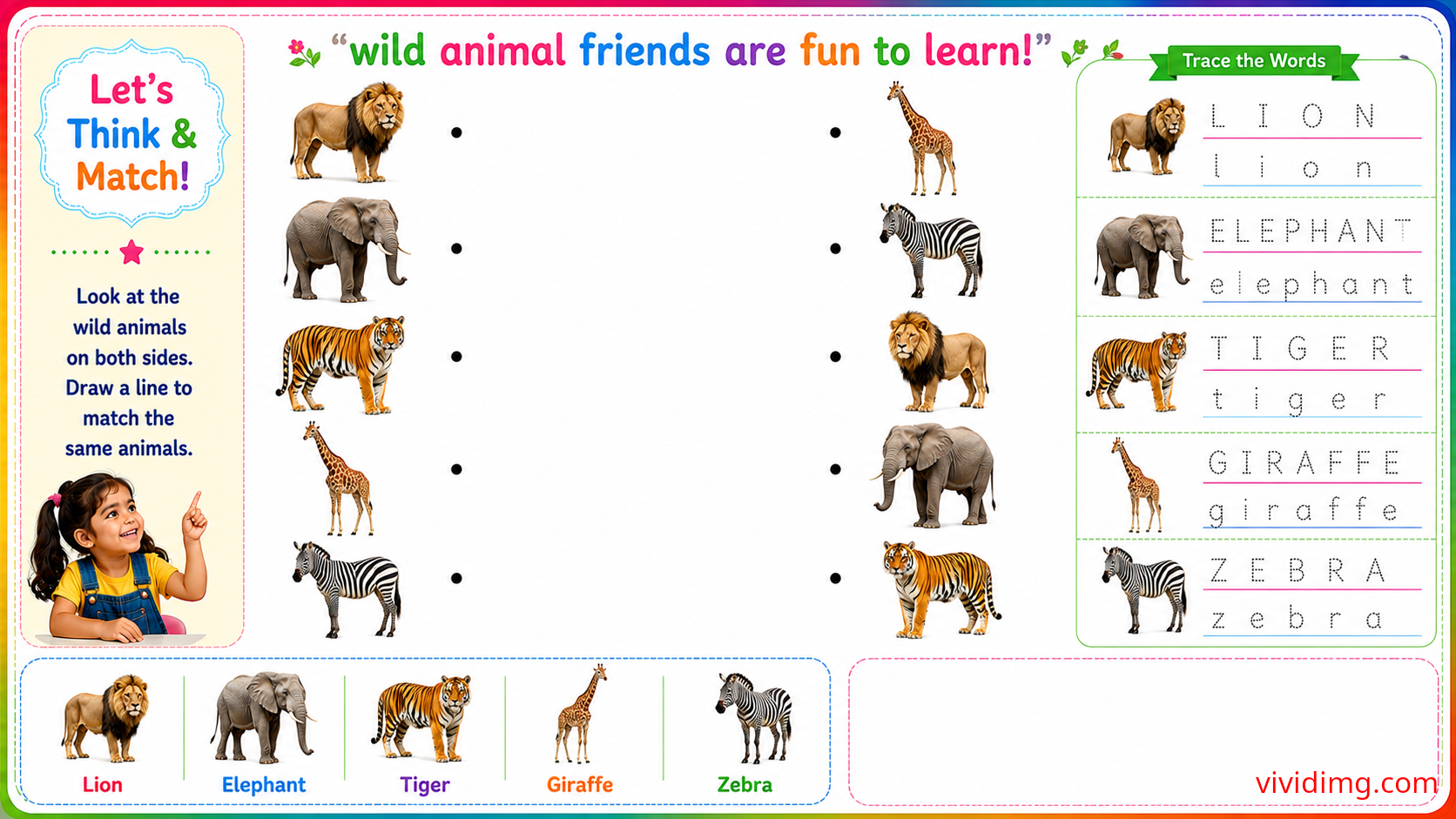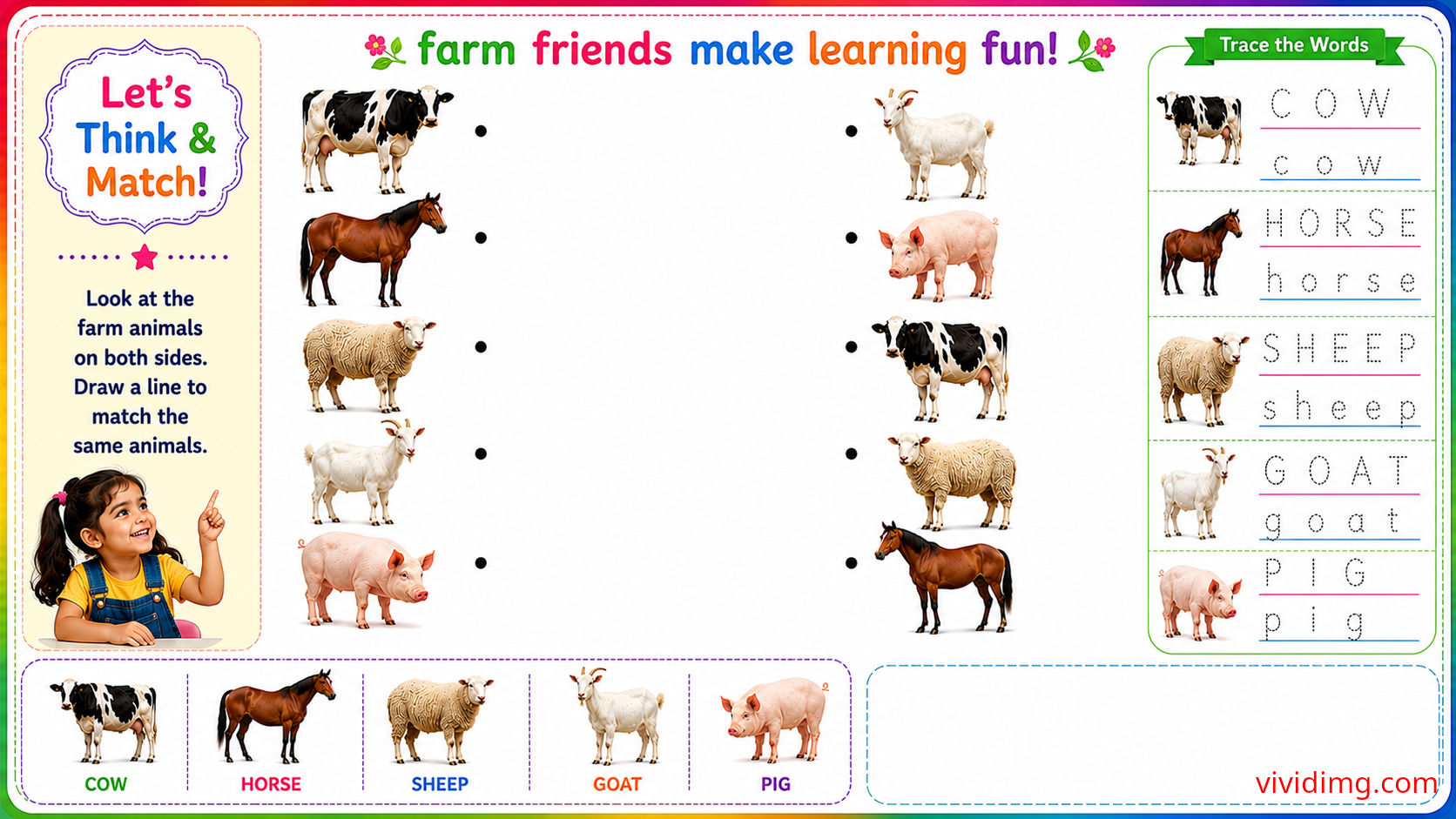
Shareable Image
Learning lovable pet animals through play – let's think & match
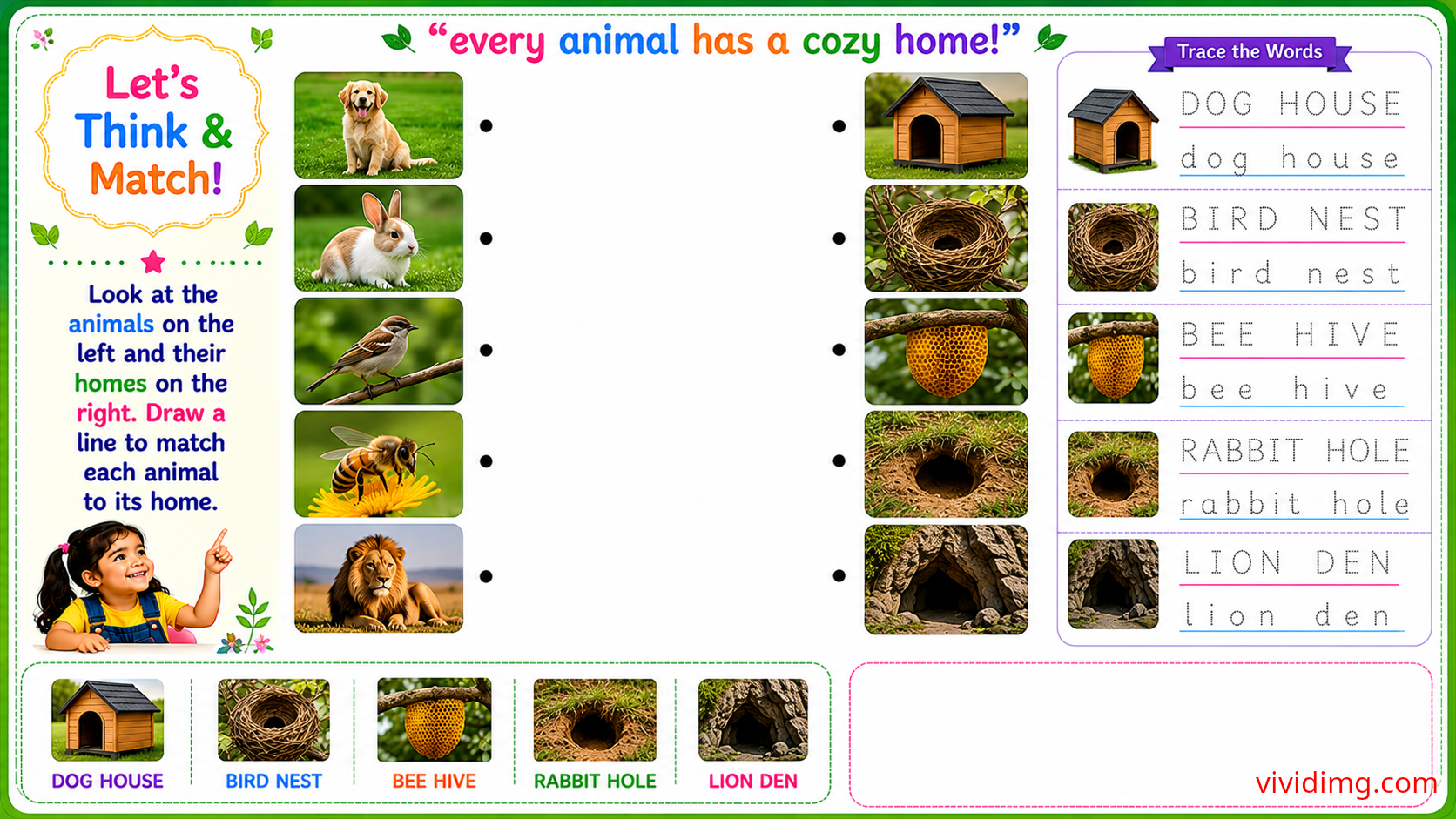
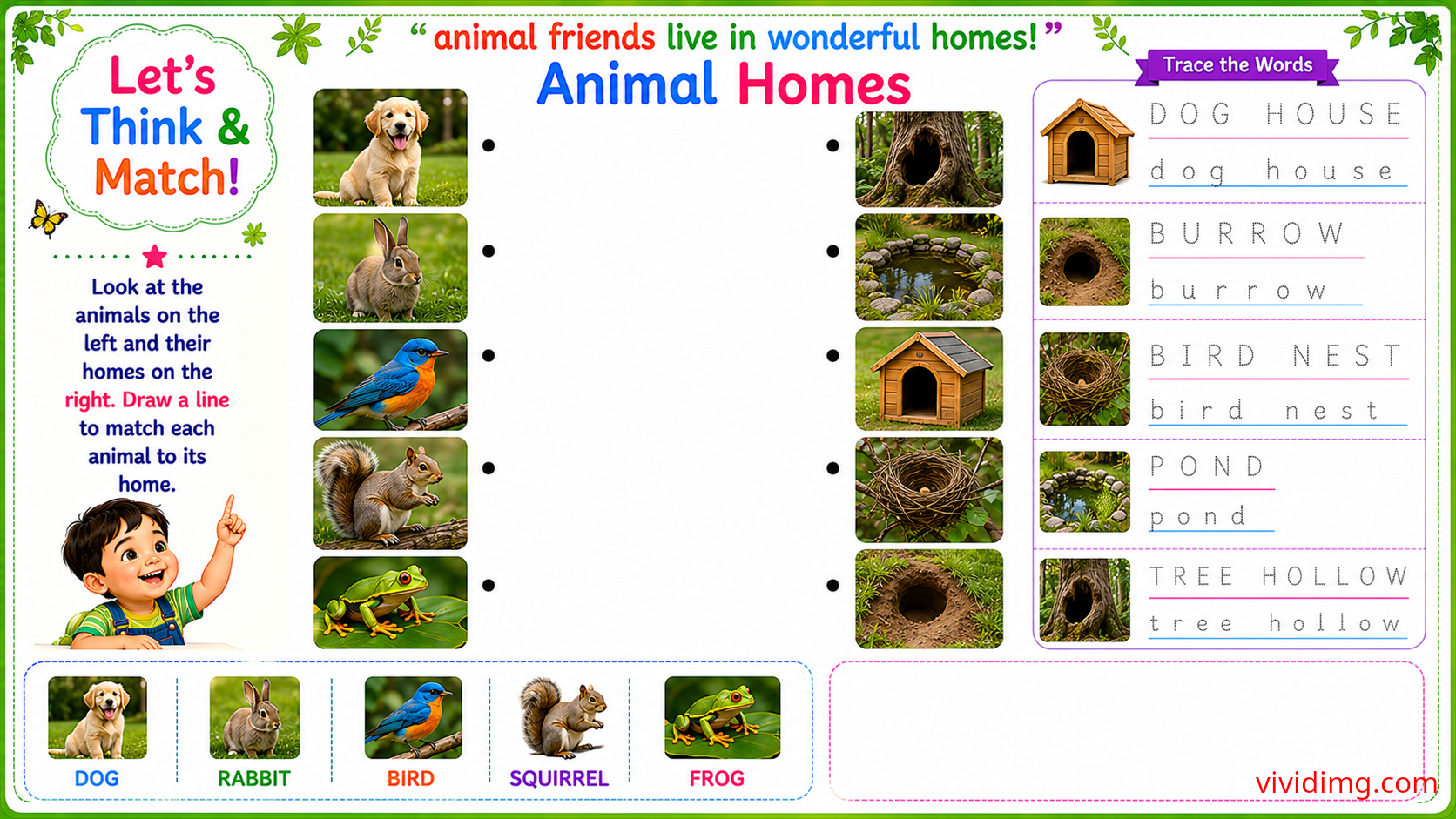
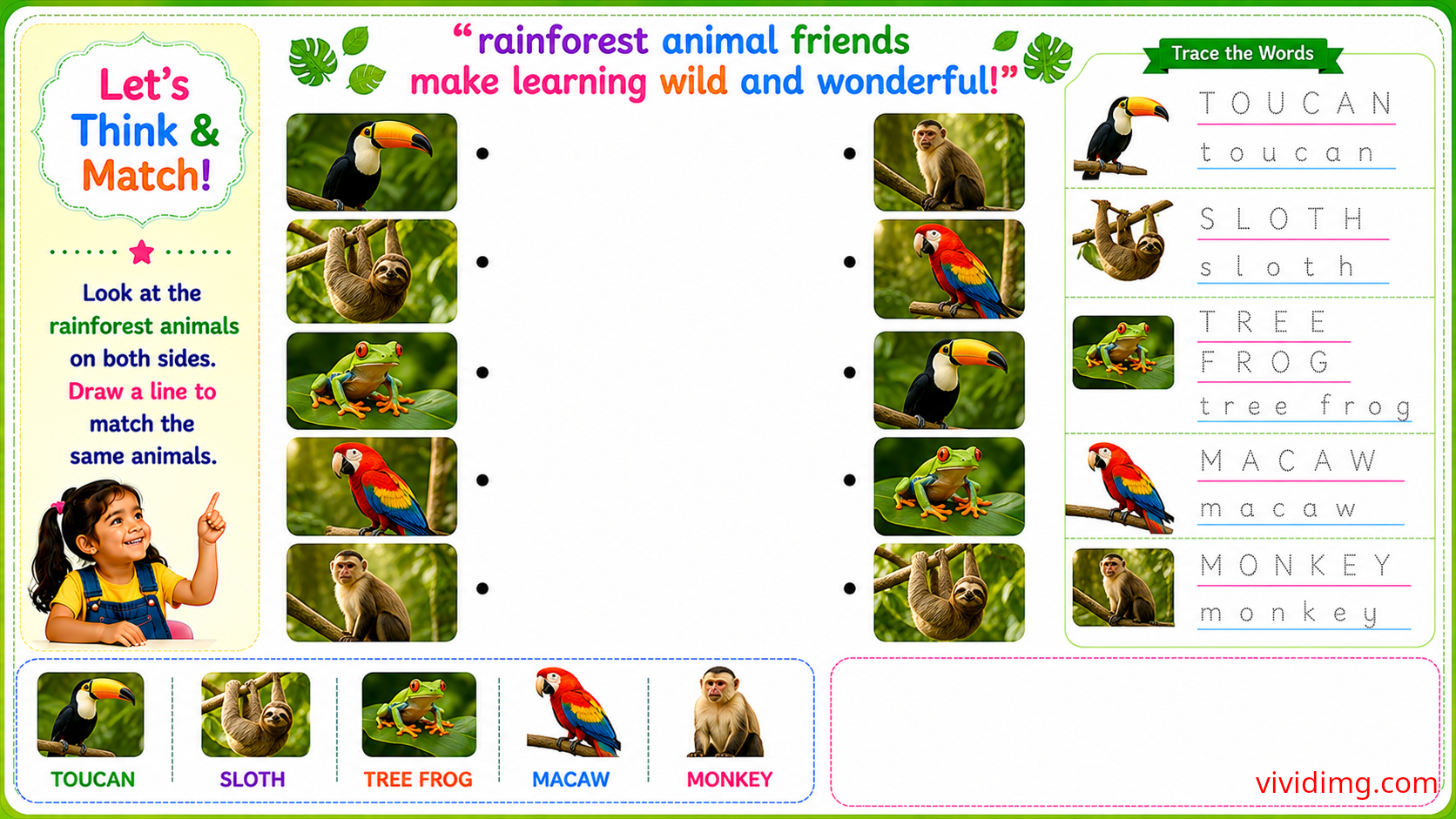
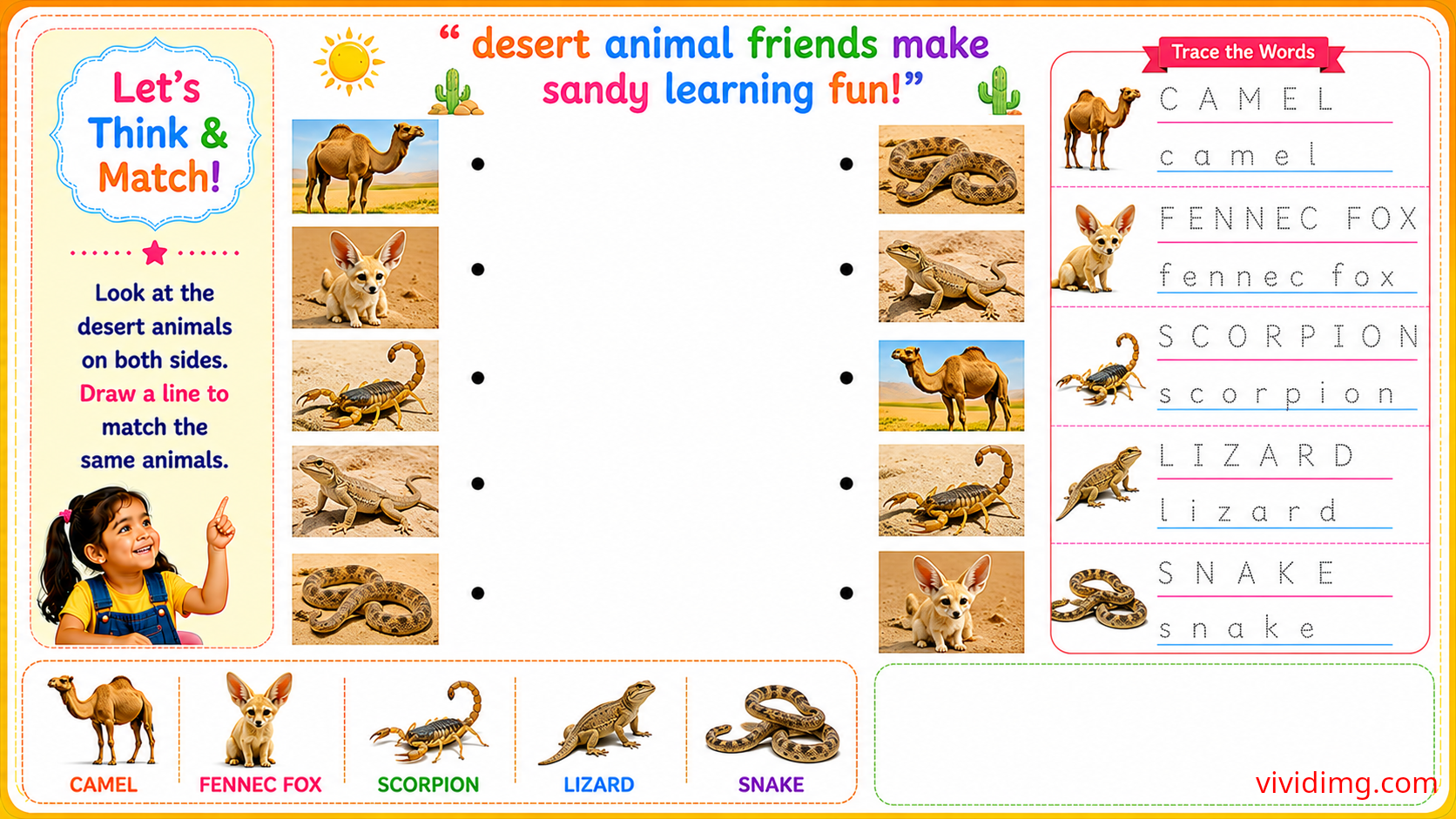
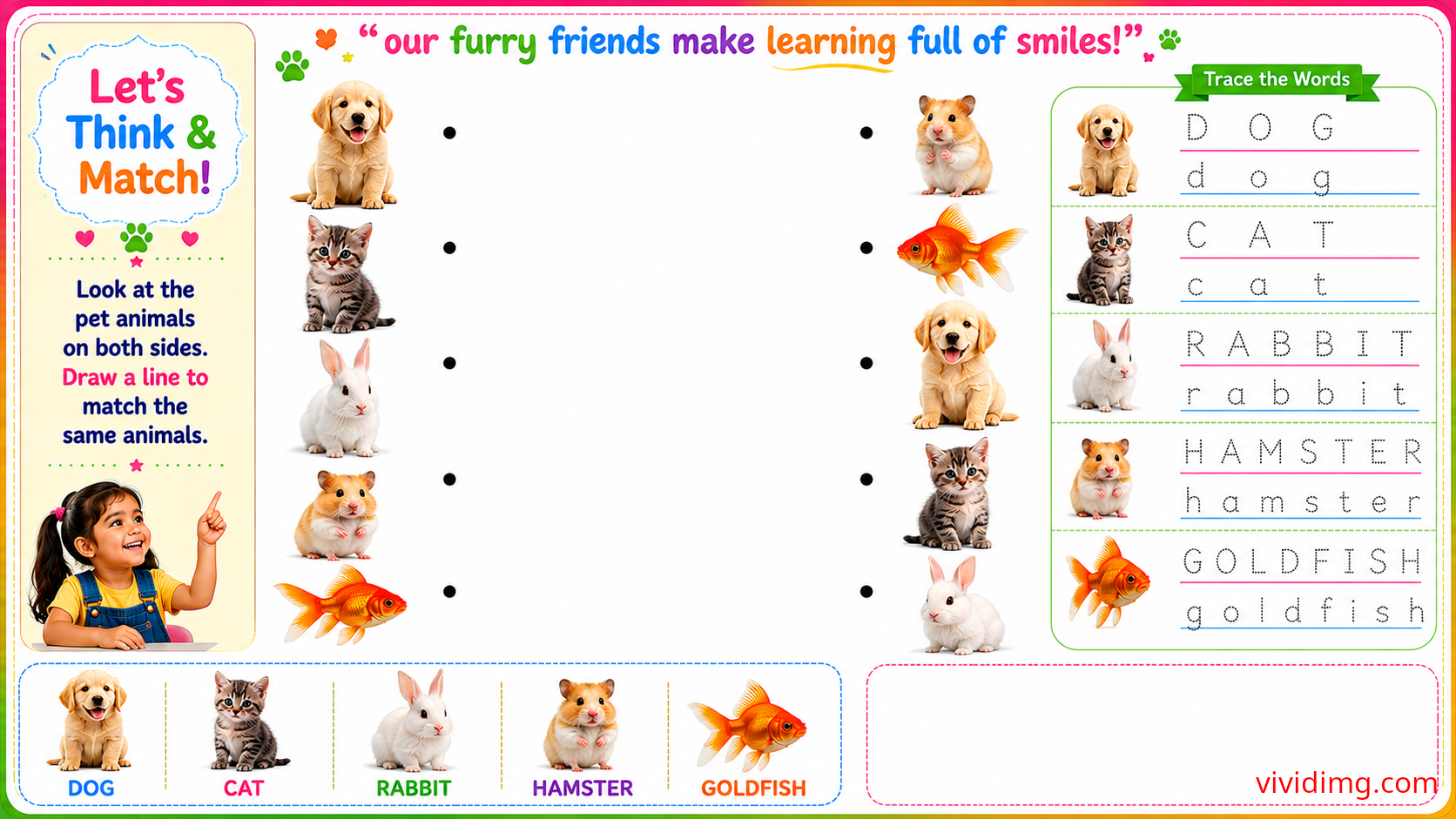
Pet animals are often among the very first companions children learn to recognize and adore. This delightful "Let's Think & Match!" worksheet introduces preschoolers to familiar furry and feathered friends through a fun, hands-on matching activity specially designed for LKG, UKG, and kindergarten learners.
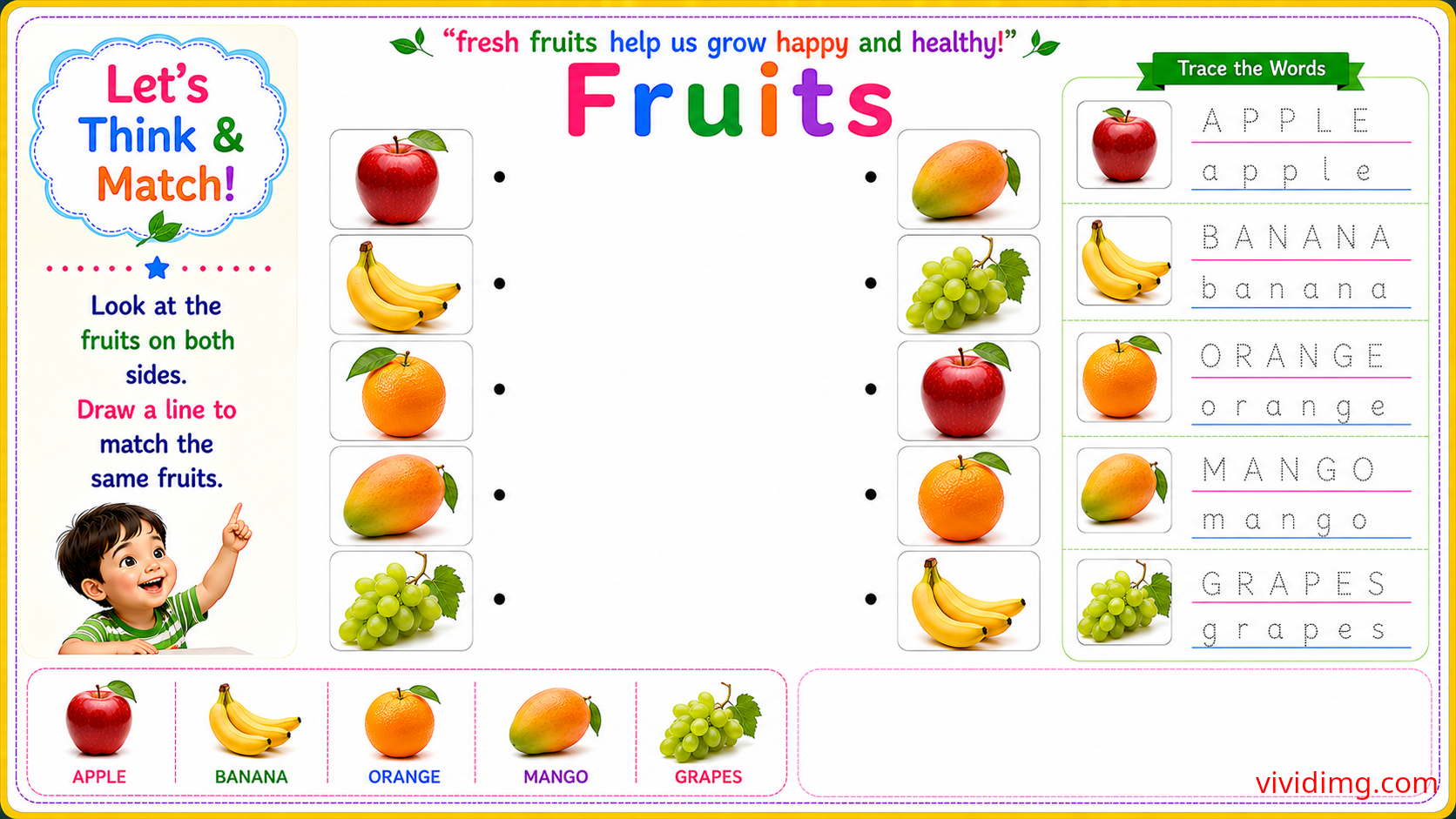
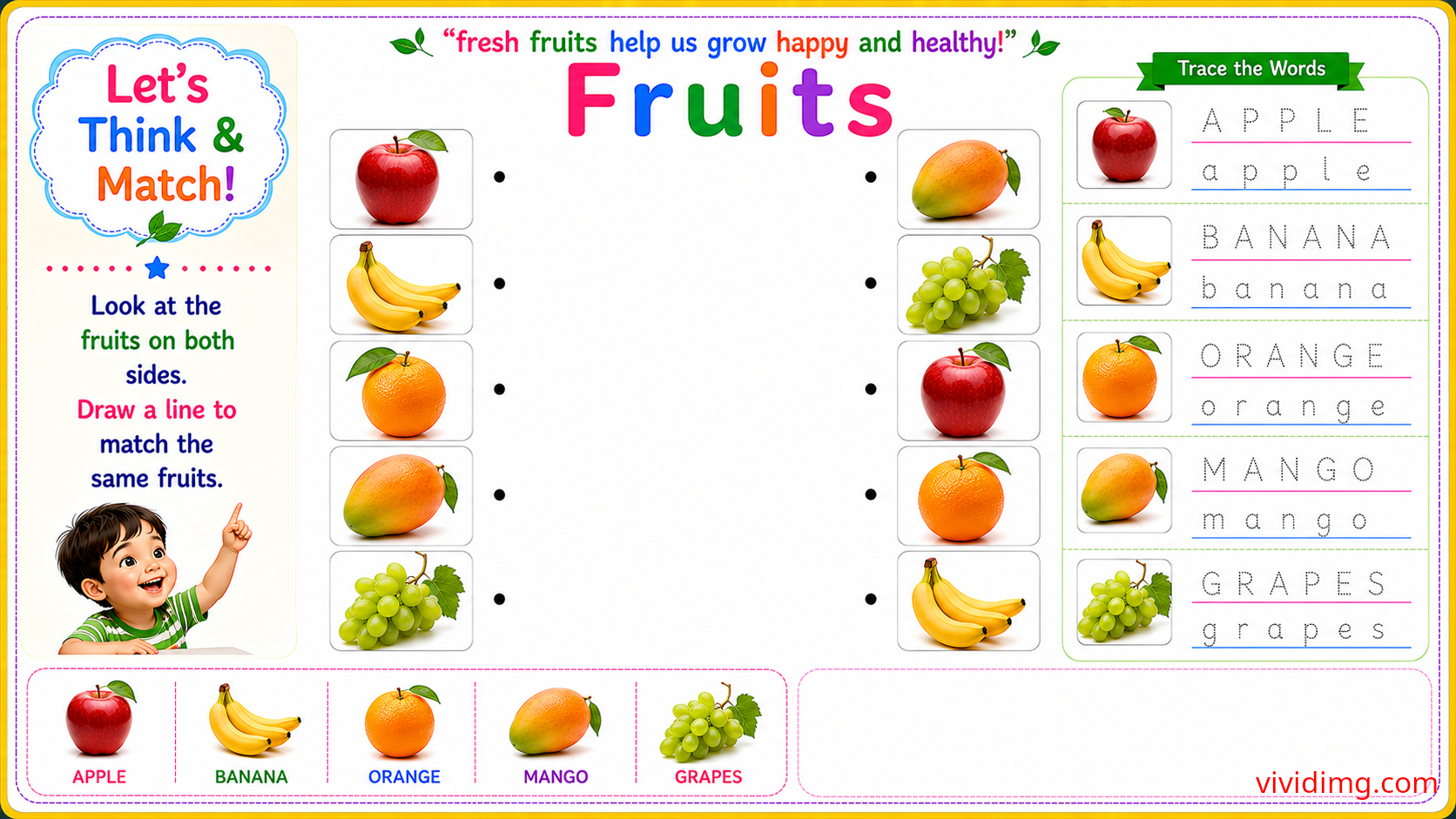
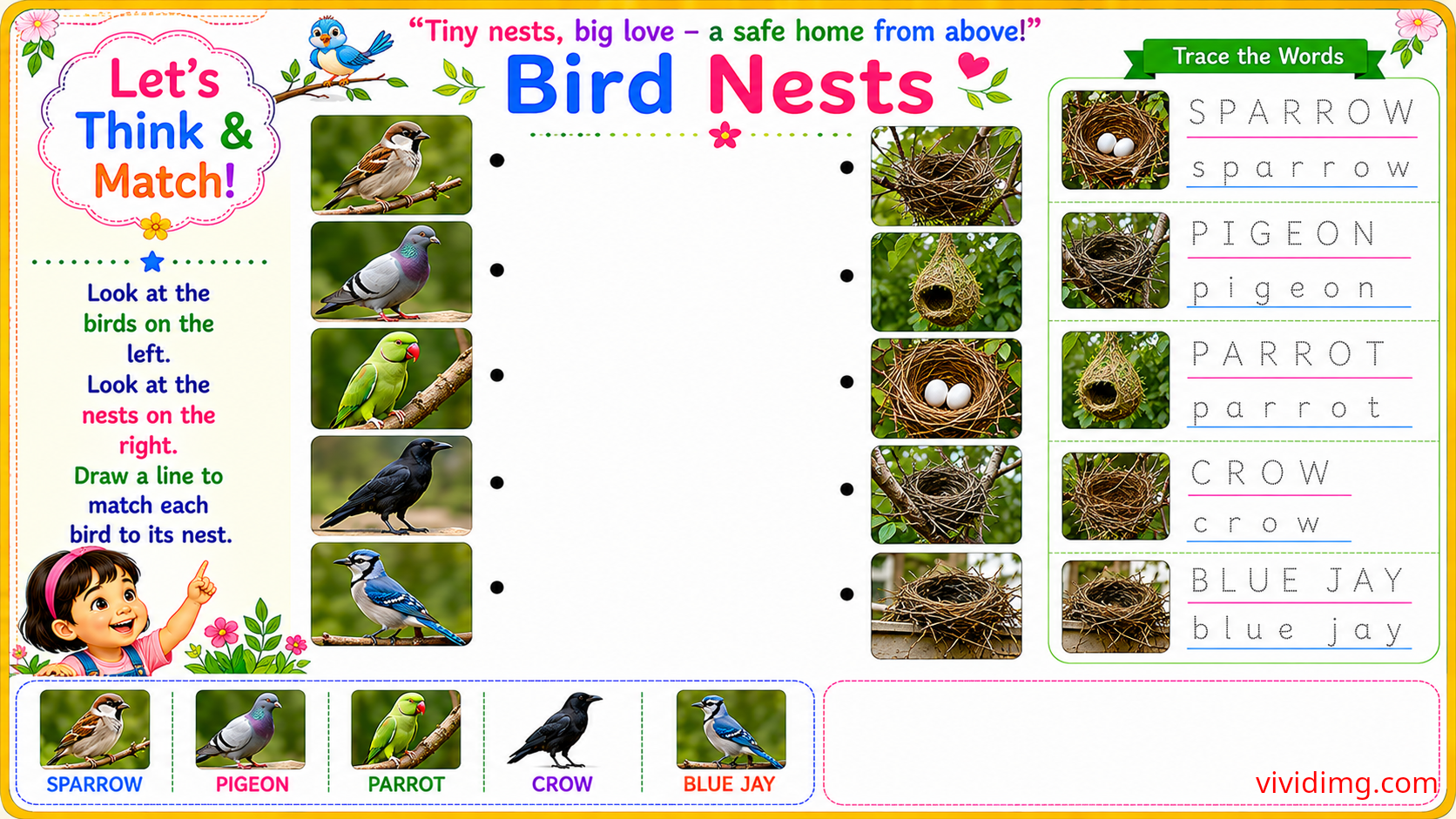
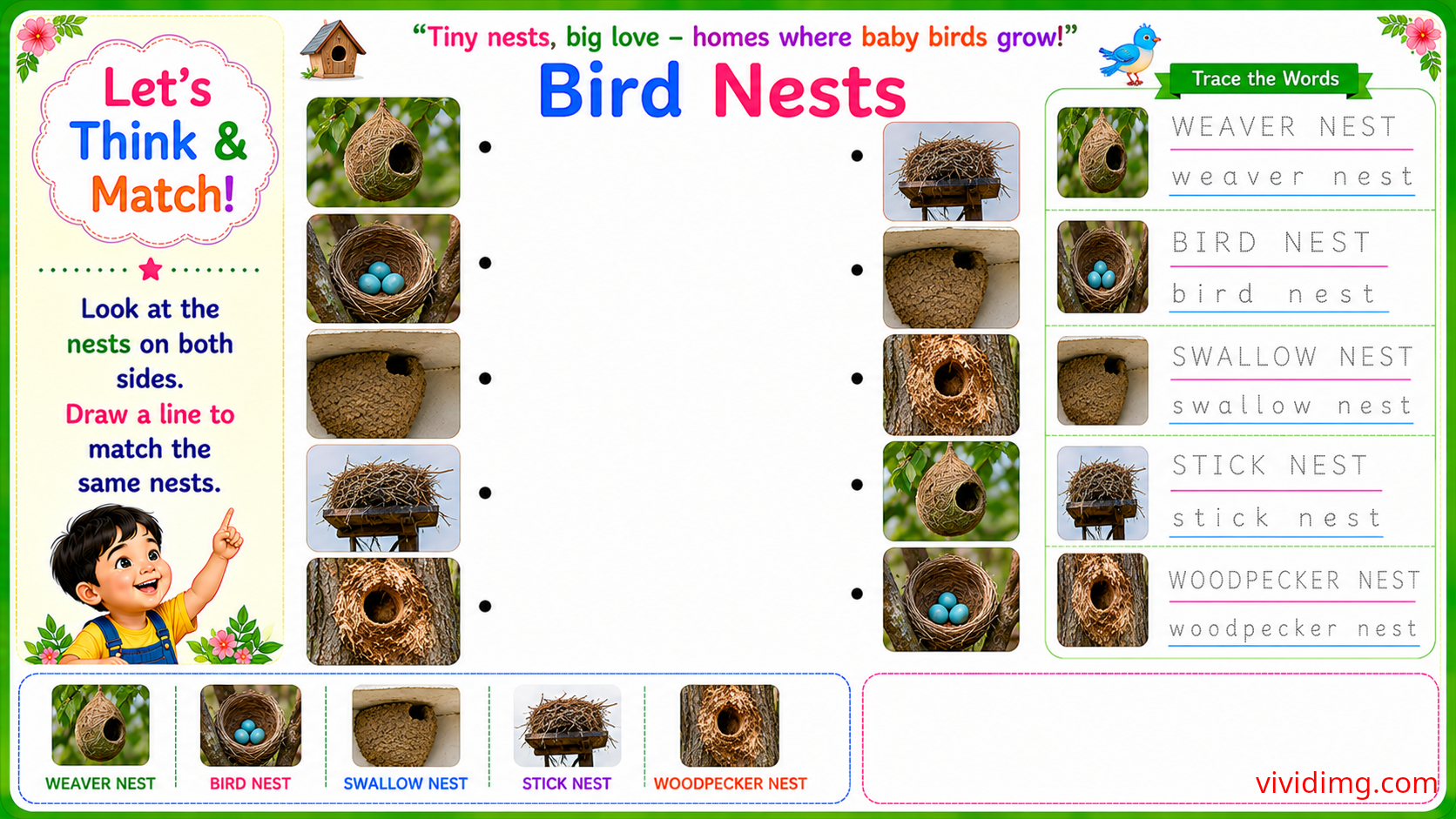
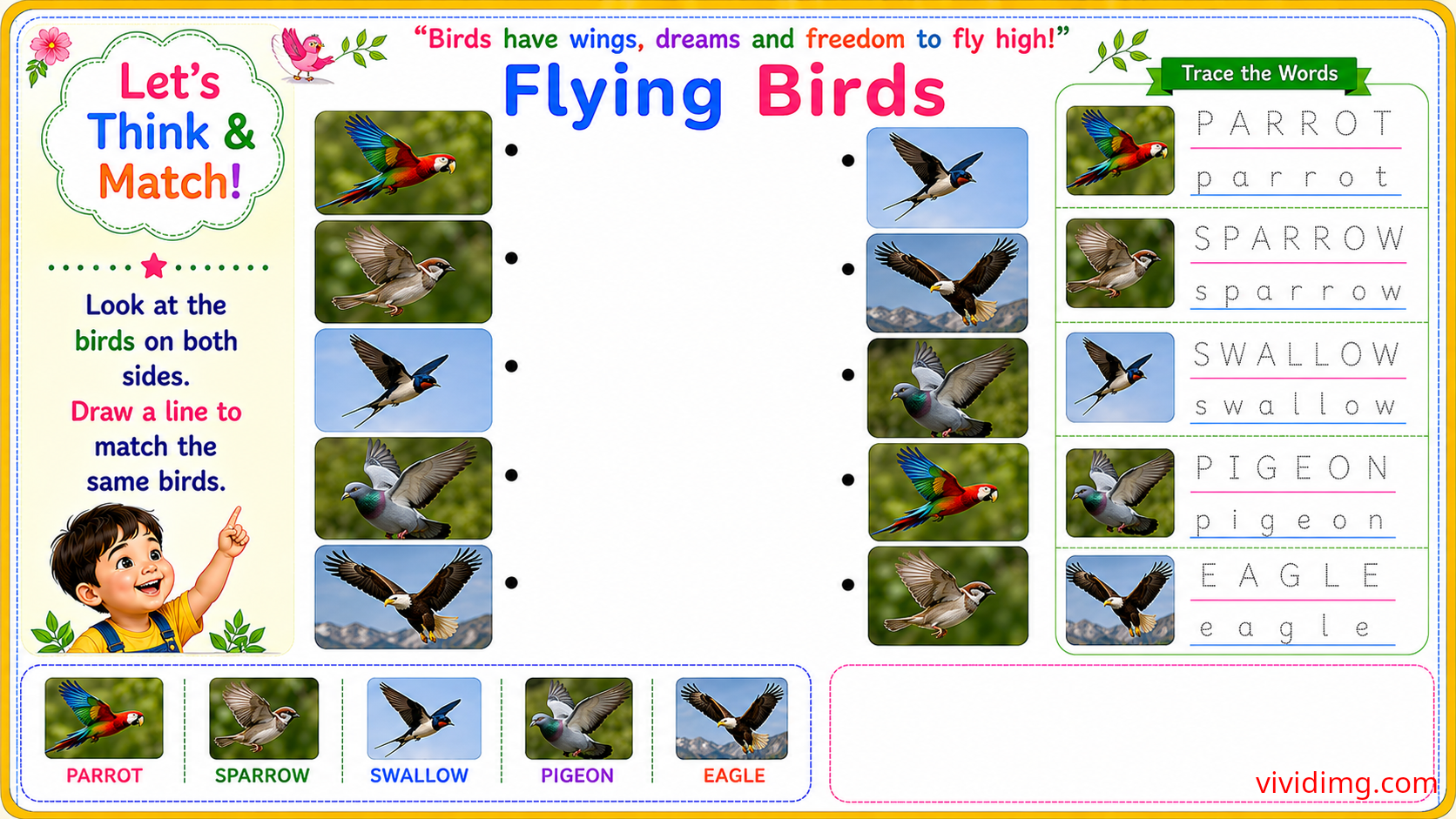
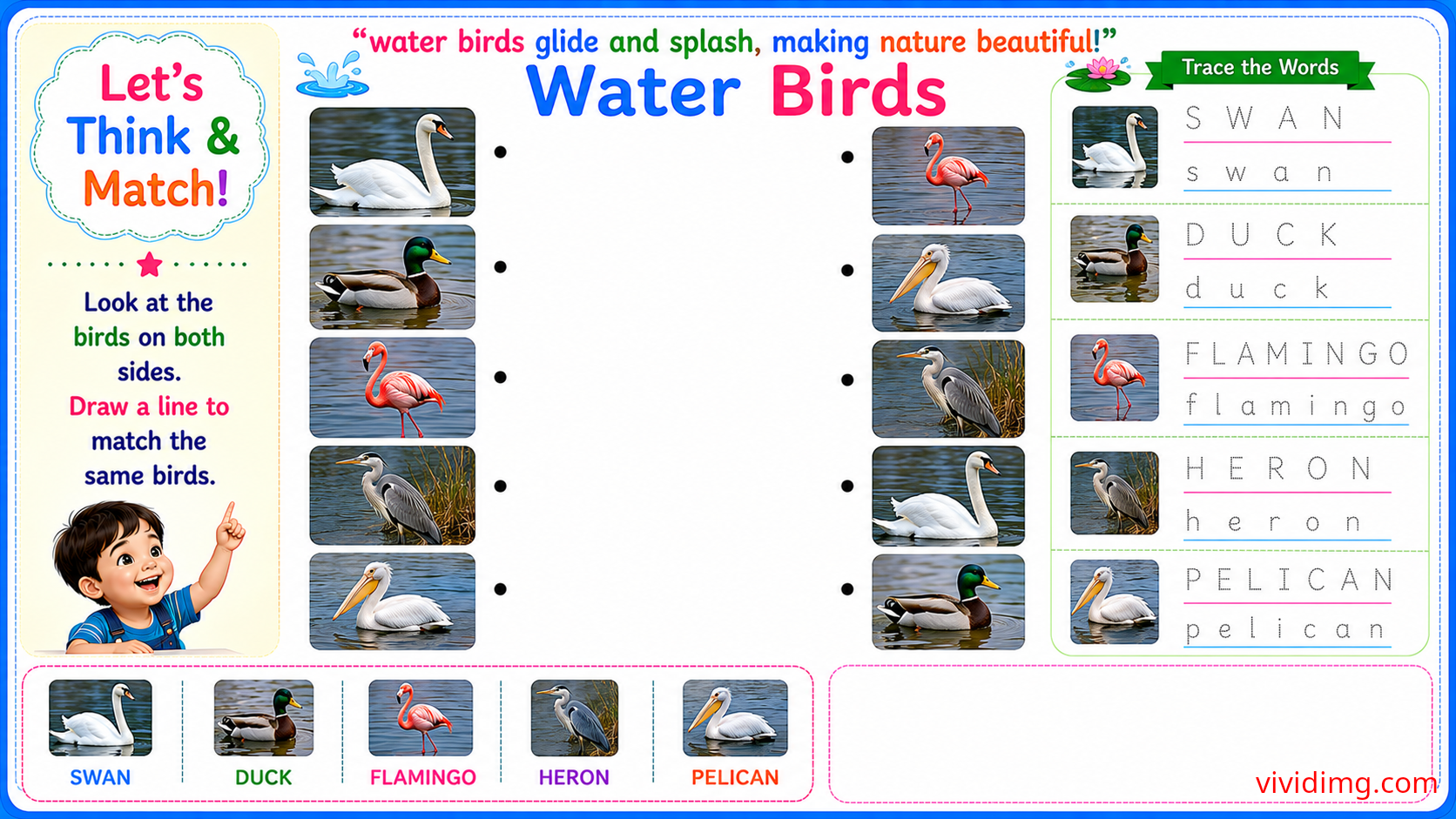
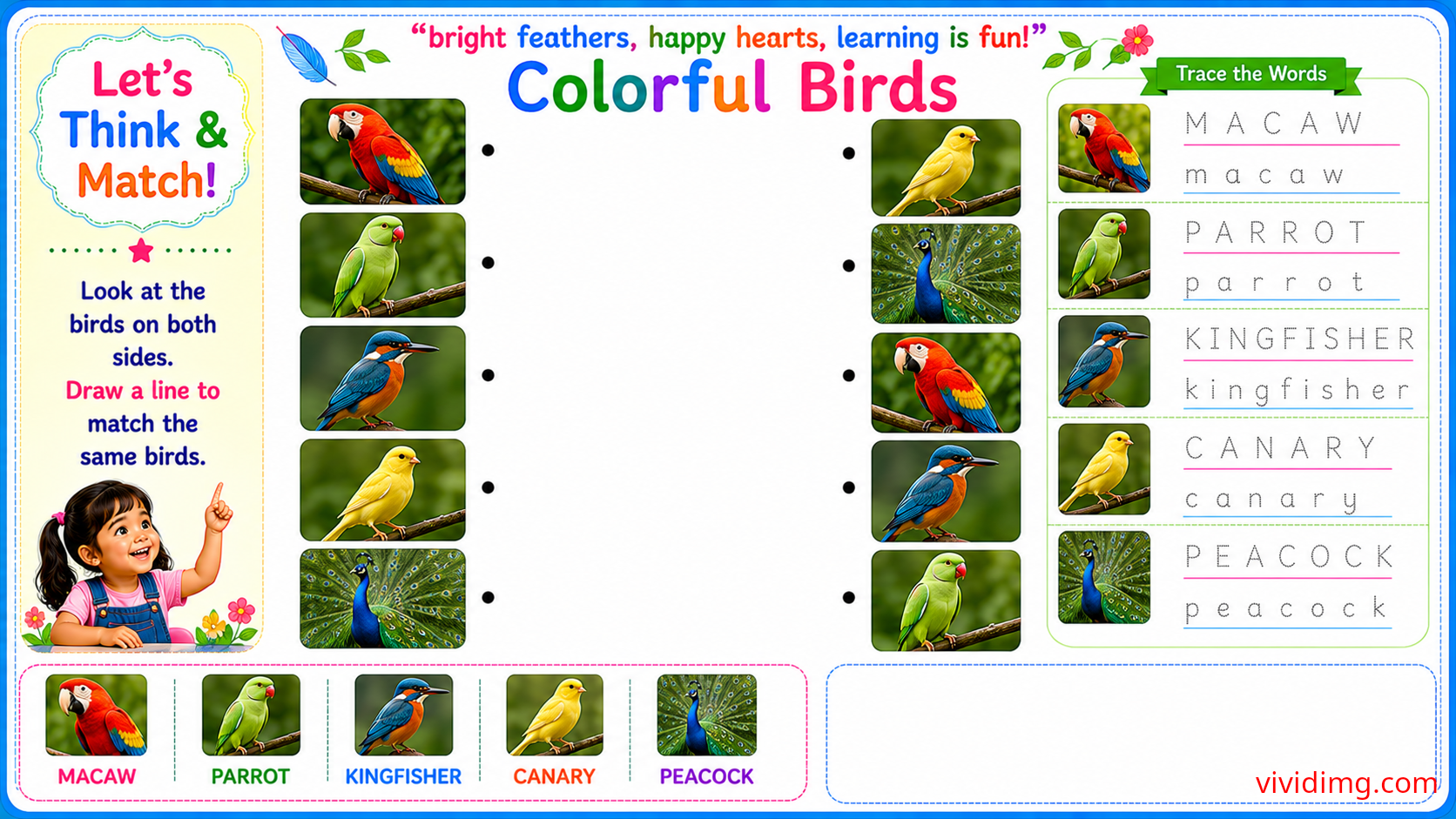
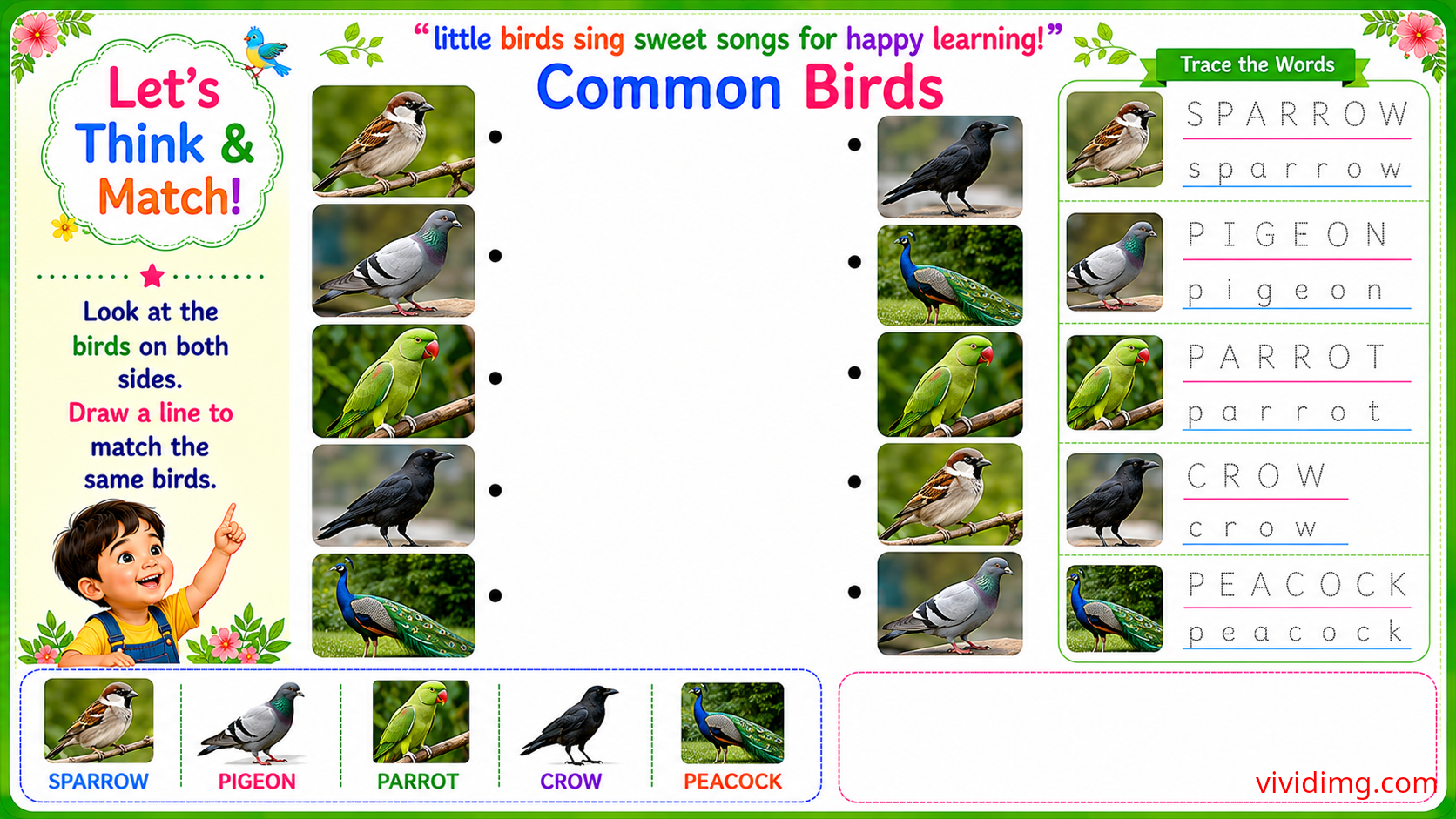
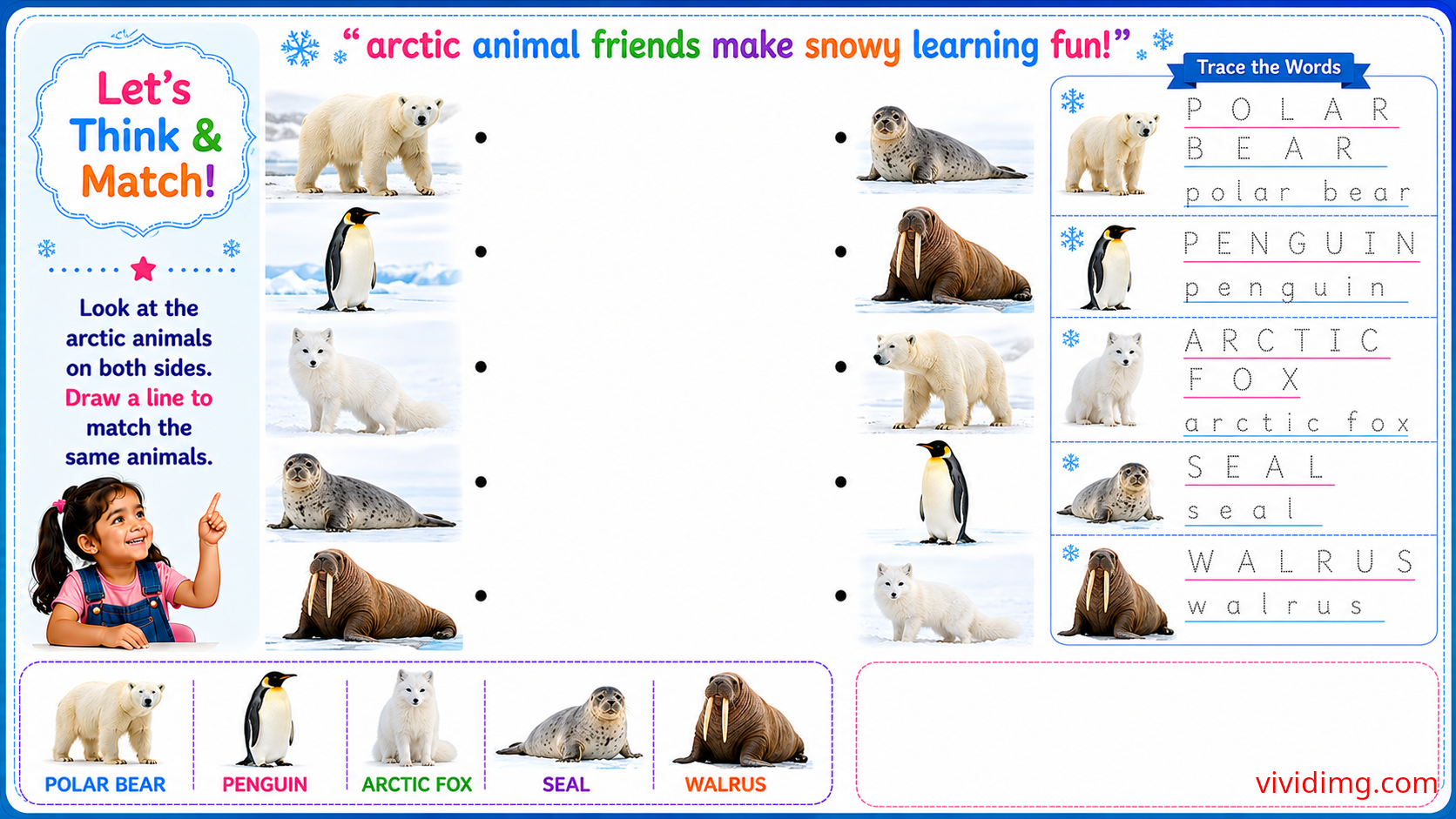
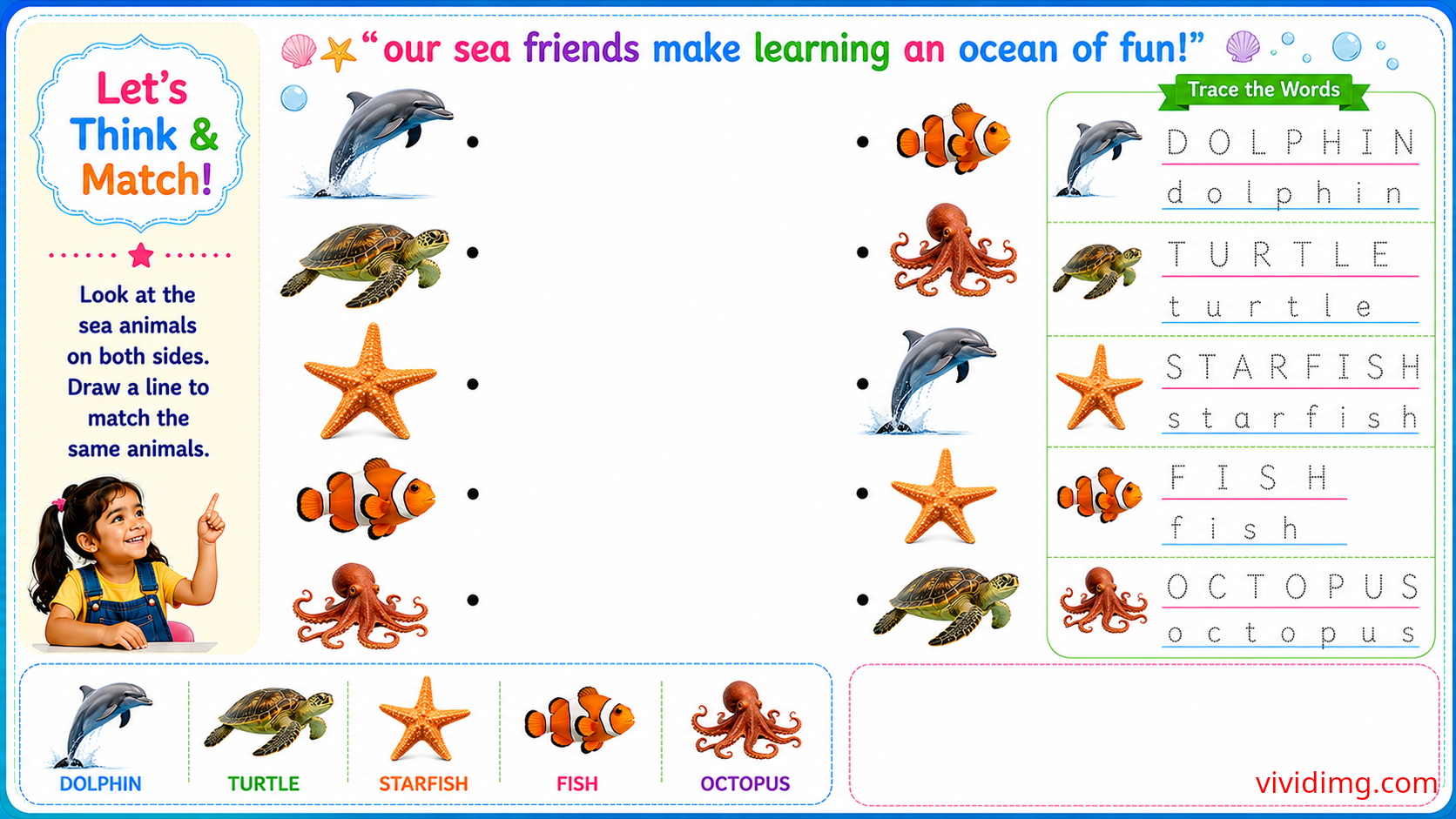
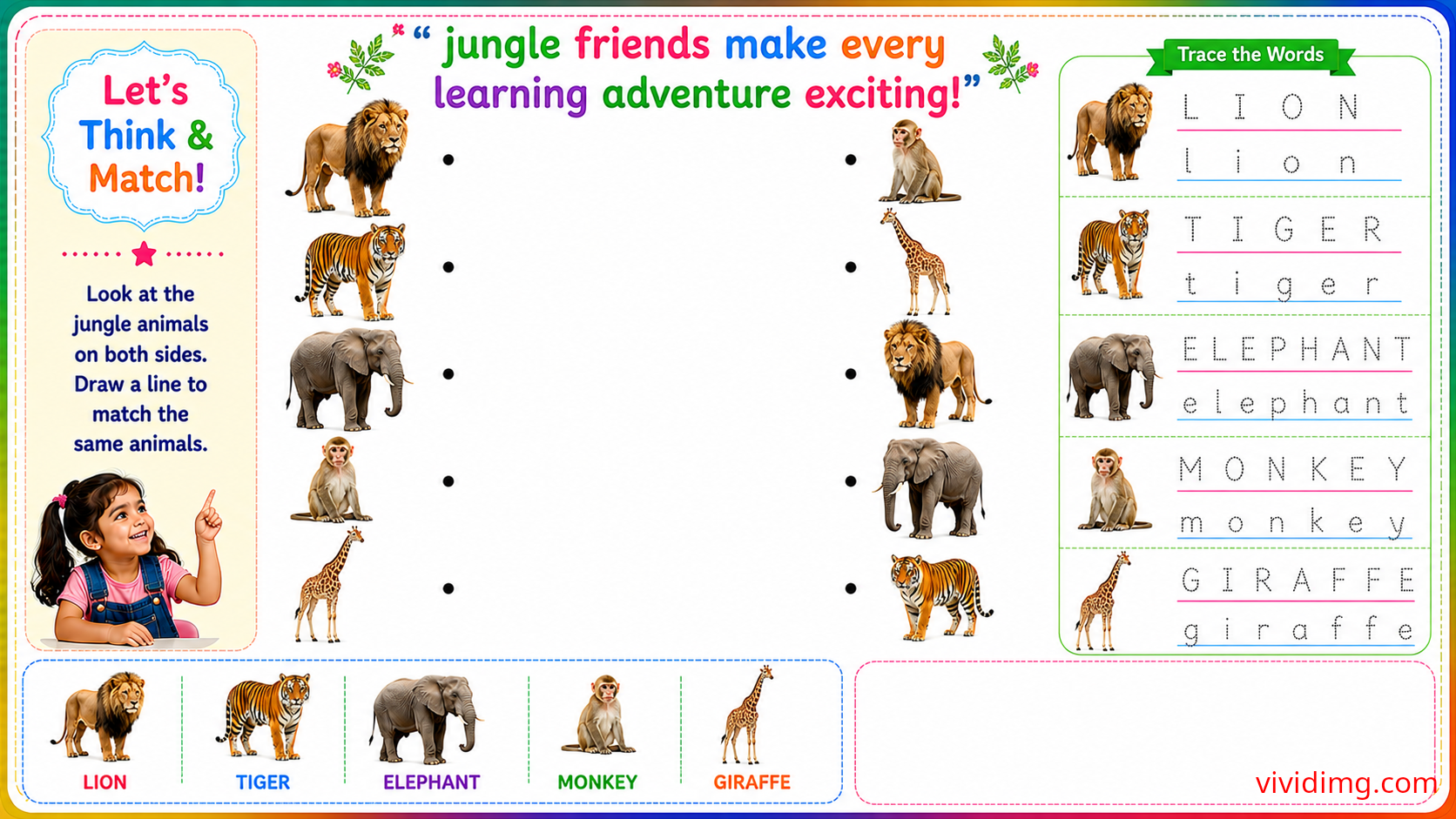
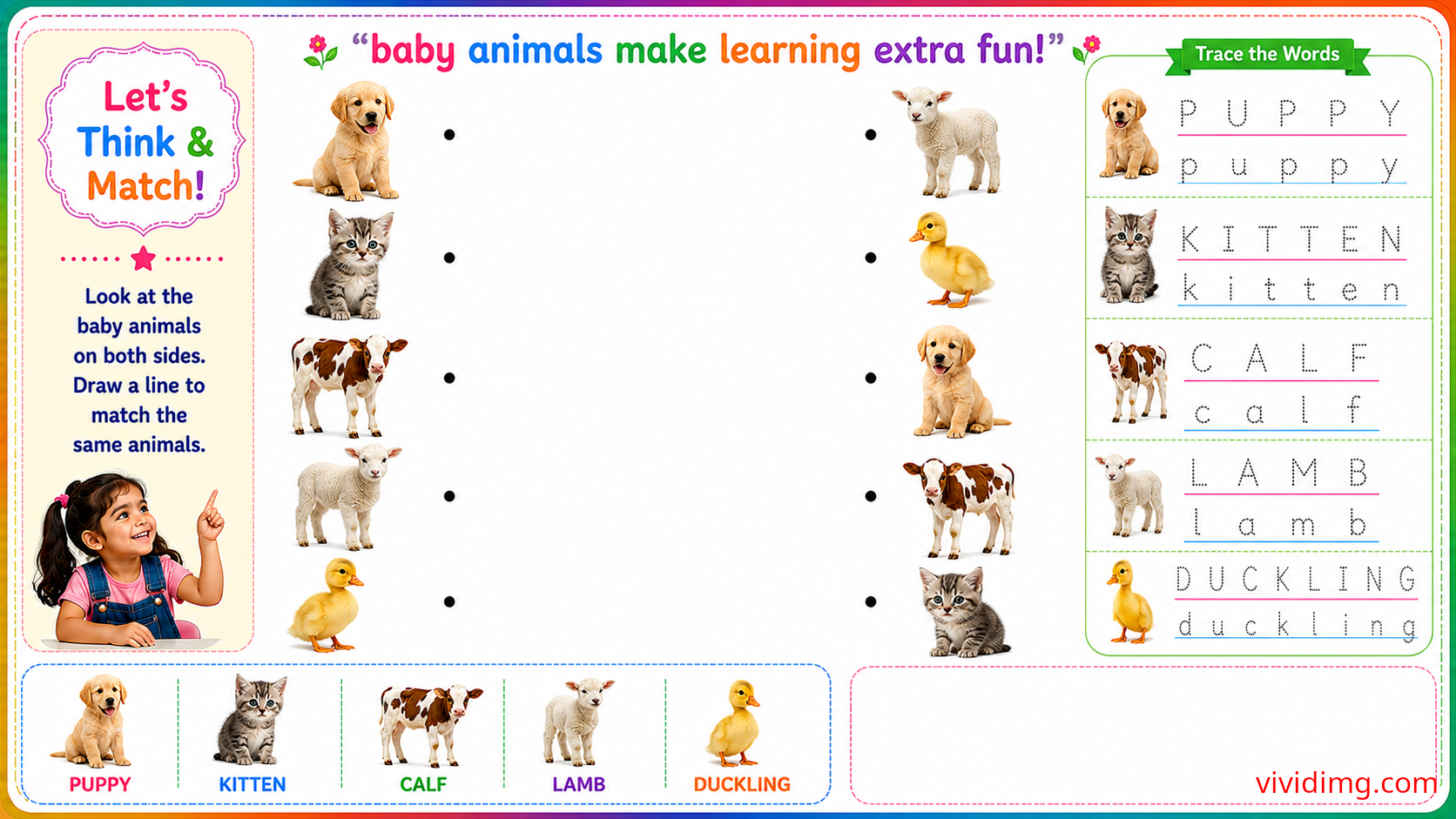
Featuring realistic photographs of dogs, cats, rabbits, hamsters, and goldfish, children are encouraged to observe carefully, compare pictures, and connect matching pairs by drawing lines. These activities naturally strengthen visual discrimination skills, attention to detail, concentration, and short-term memory while creating an enjoyable learning experience.
The worksheet goes beyond simple matching by incorporating a handwriting practice section. Children can trace uppercase and lowercase pet animal names using preschool-friendly dotted letters, helping them develop pencil control, hand-eye coordination, letter recognition, and early spelling confidence. This integrated approach allows children to build several foundational skills within a single engaging worksheet.
Parents and teachers can extend learning by discussing pet care, animal sounds, favorite pets, feeding habits, and responsibilities involved in caring for animals. The realistic photographs make it easier for children to relate classroom concepts to the pets they may already know or see around them.
Designed with bright colors, spacious layouts, and a clean Montessori-inspired appearance, this printable worksheet keeps young learners focused without overwhelming them. Whether used in classrooms, homeschooling settings, daycare activities, or educational workbooks, it provides a playful yet meaningful opportunity for vocabulary building, memory enhancement, handwriting practice, observation development, and fine motor skill improvement.
The "Let's Think & Match!" pet animals worksheet transforms learning into a joyful adventure while helping children gain confidence, curiosity, and essential early childhood learning skills.